.png)


On Tuesday, the Vatican announced it had given a firm rejection to the German bishops’ proposal that lay people be allowed to deliver homilies during Mass.
A press release from the Dicastery for Divine Worship on June 23 conveyed news of the Holy See’s response to a request from the German bishops’ conference (DBK), which had sought for members of the laity to have rights normally reserved to clergy. According to the DBK’s vote and request, lay people would have had the right “in exceptional circumstances” to deliver a homily at Mass.
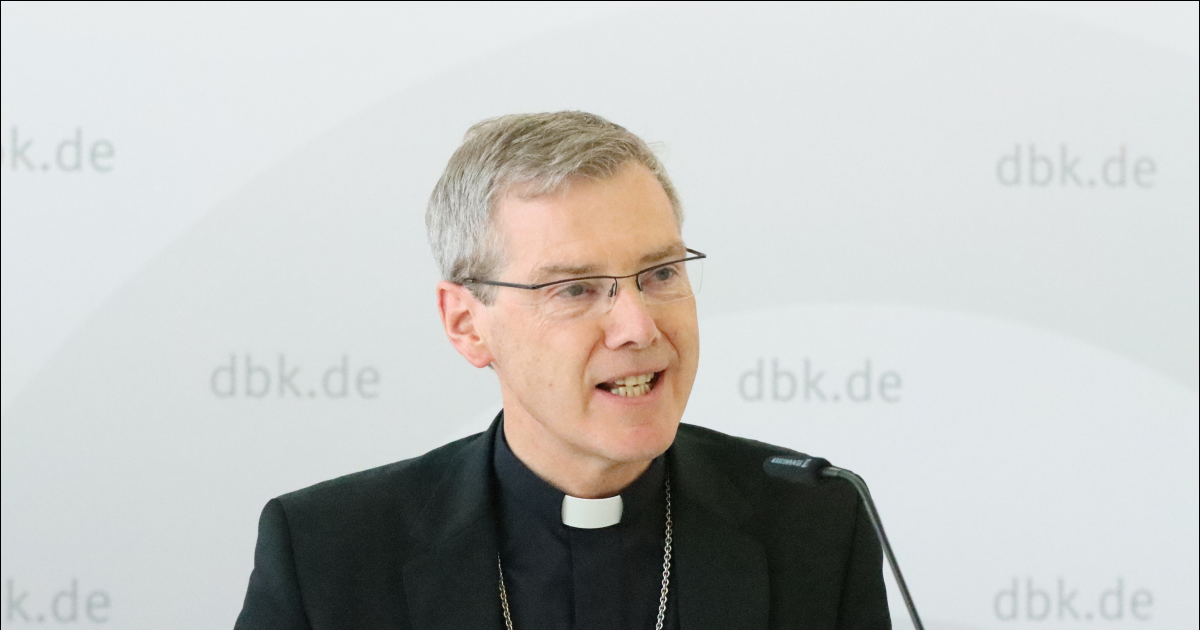
The DBK vote on the matter came on February 26, just after the election of Bishop Heiner Wilmer SCJ as the new chairman of the DBK, and its request was made to the Vatican on March 30.
But in denying such a plea, the Dicastery for Divine Worship and the Discipline of the Sacraments wrote that “the current discipline cannot be dispensed from by means of an indult, since the reservation of the homily to a priest or deacon is not a merely disciplinary norm but derives from the very nature of the liturgy”.
The Vatican’s liturgical office, led by Cardinal Arthur Roche, added that a homily at Mass constitutes “an integral part of the Liturgy of the Word, is intrinsically linked to the proclamation of the Gospel, and constitutes an exercise of the munus docendi entrusted to ordained ministers through the Sacrament of Holy Orders”.
As such, read the summary, the “proclamation of the Word within the liturgical celebration is inseparable from the mission received sacramentally and from the unity that binds together Word and Sacrament in the Eucharistic celebration”.
Shortly afterwards, the DBK published the Holy See’s full letter, dated June 17. Signed by Cardinal Roche, the letter notes that the matter raised in the request has “been repeatedly reaffirmed by the Magisterium, particularly in the Instruction Redemptionis Sacramentum (nos. 64–66), which expressly excludes the possibility that lay faithful may deliver the homily during the celebration of Mass, even under a different name”.
That instruction notes explicitly that if the priest himself is not delivering a homily, he “may entrust it to a concelebrating Priest or occasionally, according to circumstances, to a Deacon, but never to a layperson”.
“For the priest,” added Roche, “the preparation and delivery of the homily are an integral part of his priestly ministry and spirituality and cannot be separated from them.”
The cardinal also rejected the possibility of distinguishing formally between a priestly homily and a lay-delivered sermon in this setting, explaining that “in light of these considerations, the proposed distinction between a ‘homily’” and another form of preaching was untenable because “the proposed placement – immediately after the Gospel – and the function performed essentially correspond to those of the homily itself”.
Instead, Roche urged that lay participation in the Church’s life be proper to its place, allowing the priest to maintain his own sacramental duty. These lay roles could include “participating in the preparation of homilies and in other forms of catechesis and evangelisation”. According to Roche, lay participation in such activities “enriches the ordained ministers themselves while at the same time respecting the respective roles proper to each state of life”.
The practice of lay homilies is firmly prohibited by Canon 767 §1, which reads: “Among the forms of preaching, the homily, which is part of the liturgy itself and is reserved to a priest or deacon, is preeminent; in the homily the mysteries of faith and the norms of Christian life are to be explained from the sacred text during the course of the liturgical year.”
A commentary on lay preaching, issued in 2001 by the USCCB president at the time, then-Bishop Wilton Gregory, outlined this prohibition and explained it further:
“In providing for preaching by the lay faithful the diocesan bishop may never dispense from the norm which reserves the homily to the sacred ministers (c. 767, §1; cfr. Pontifical Commission for the Authentic Interpretation of the Code of Canon Law, 26 May 1987, in AAS 79 [1987], 1249). Preaching by the lay faithful may not take place within the Celebration of the Eucharist at the moment reserved for the homily.”
The Vatican’s declaration will come as a blow to the German bishops and to their new chairman, Bishop Wilmer, who personally championed most of the radical proposals advanced by the conference.
His election as chairman was viewed at the time as a clear signal to Rome of the intention of the DBK, which itself has been engaged in dialogue with the Holy See for a number of years over the heterodox issues advanced by the nation’s Synodal Way.
But the key factor will remain unchanged, namely what notice the DBK will take of Rome’s rejection of its request. By pushing on with lay preachers unofficially and on irregular occasions, the DBK will probably begin to effect its end goal regardless of the Holy See’s declaration, and its actions hitherto have shown no great apprehension when it comes to flouting ecclesial law.
One important aspect in this will be whether Leo’s meeting with Bishop Wilmer this spring was enough to impress upon the DBK chairman the principle that if Rome has forbidden an action, then it must follow the directive.
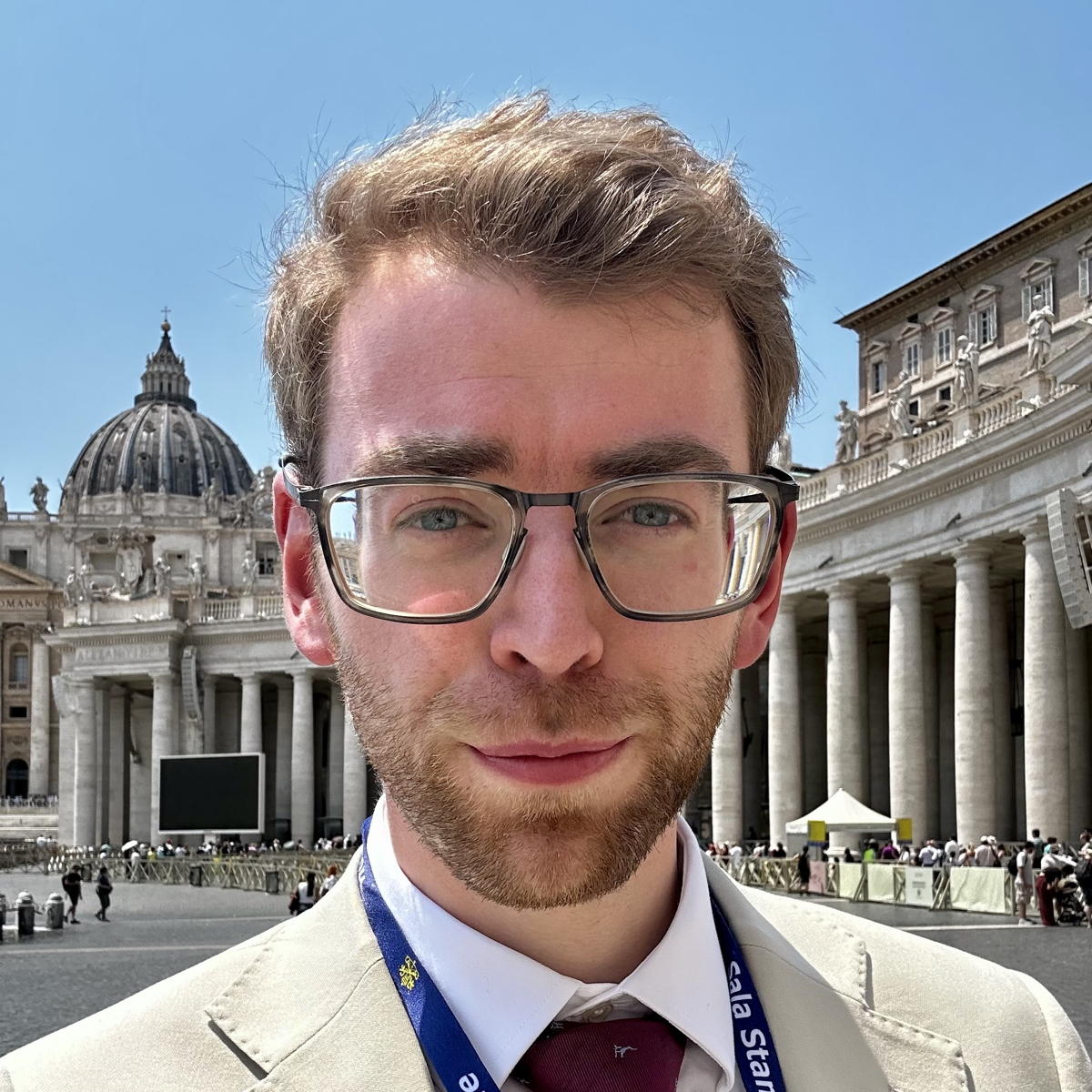
Michael Haynes is an English journalist in the Holy See Press Corps. He serves as Vatican Correspondent and Analyst for Pelican+ and the Catholic Herald, while readers can follow him at Per Mariam and on X/Twitter @MLJHaynes.