

February 12, 2026

Shrine at Jesus’s tomb ‘may still collapse’

Staff writers
More
Related
Min read
share

Restorers have said there is a “very real risk” that the shrine built over Jesus’s tomb may collapse.

Their warning came just as the structure was newly opened to the public after a year-long renovation.

Antonia Moropoulou, chief scientific supervisor at the National Technical University of Athens, which completed the renovation, said: “When it fails, the failure will not be a slow process, but catastrophic.” She told the National Geographic that the project had revealed the shrine was built on unstable remnants of earlier buildings.

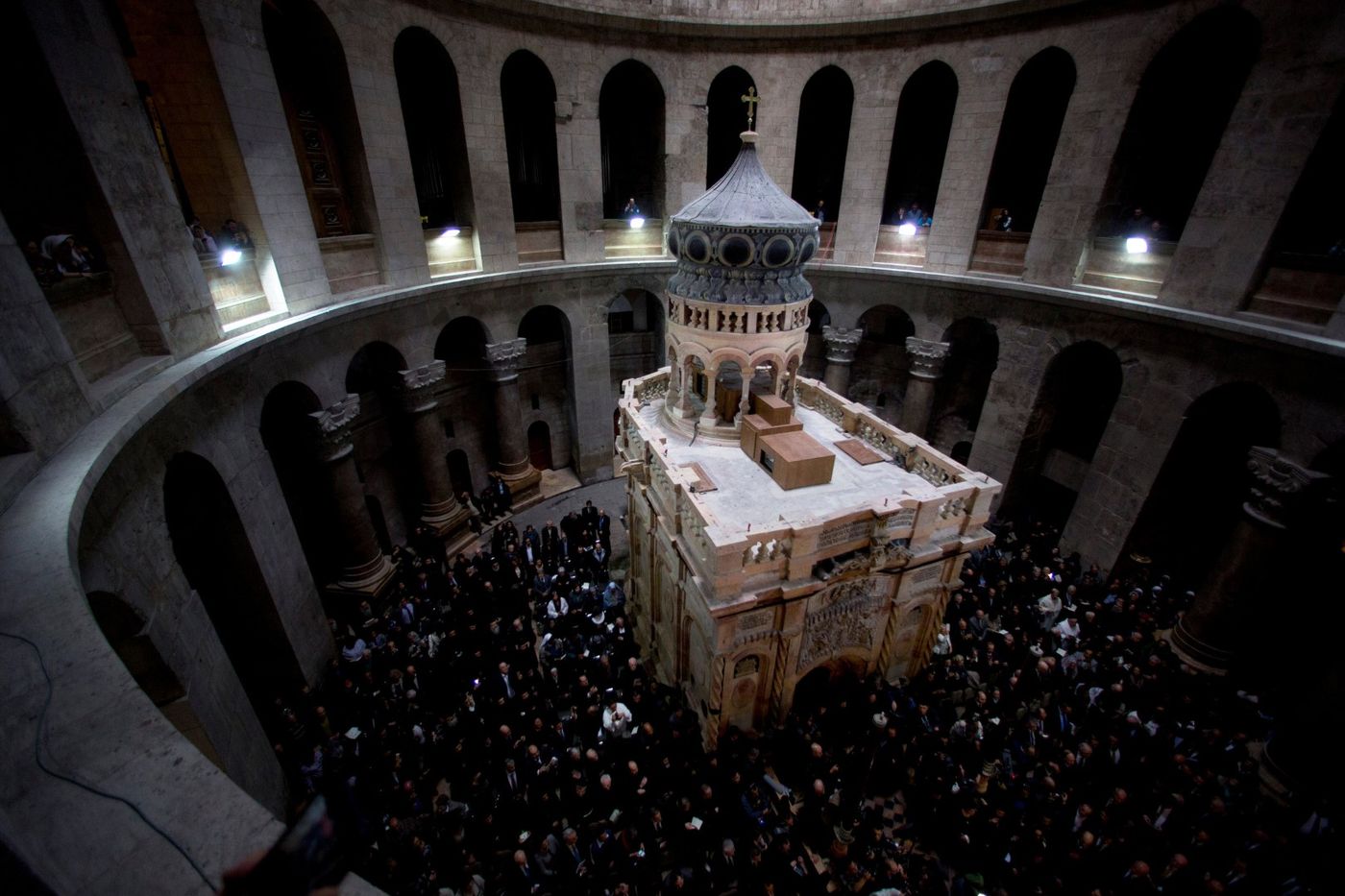
The Edicule (Latin for “little house”) is a small structure inside the Church of the Holy Sepulchre in Jerusalem. It encloses the remains of a cave venerated since at least the fourth-century AD as the tomb of Christ.

The 200-year-old Edicule was renovated for the first time after Israeli authorities deemed it unsafe and leaders from the three churches that share custody of the church came to an agreement for the work to proceed. Last week the structure was inaugurated in an ecumenical ceremony led by representatives of the Catholic, Greek Orthodox, and Armenian churches, including Ecumenical Patriarch Bartholomew of Constantinople. Archbishop Pierbattista Pizzaballa, apostolic administrator of the Latin Patriarchate of Jerusalem, said some believed the churches could not surmount their centuries-old disagreement.

“With God nothing is impossible,” he said. “This apparent mission impossible became possible because we allowed God to enlighten our thoughts and our eyes and our relations.”


Christians in northern Iraq ‘on the verge of extinction’

A senior aid worker within the Chaldean Catholic archdiocese in northern Iraq has described the Christian population there as “on the verge of extinction” and is appealing to the British and US governments for humanitarian assistance.

Stephen Rasche, legal counsel and head of resettlement programmes for the diocese, addressed both Houses of Parliament last week on the need for aid for Iraqi Christians.

Speaking to the Catholic Herald, he said: “The future really does hang in the balance.” He added: “Much of it depends on the continued support and assistance that receive from the West over the next six to 12 months.

“History could look back on this and say ‘in their time of greatest need, they didn’t get the support and the community disappeared’. That could happen. We need to be honest about that.”

When ISIS took control of the Nineveh Plains in northern Iraq in 2014, Christian families were forced to flee, many seeking refuge in Erbil, 80km east of Mosul. Since 2003, the Christian population in Iraq has declined from 1.4 million to 275,000.


South Sudan faces mass famine

About five million people in South Sudan – half its population – are on the brink of starvation and 250,000 children are already severely malnourished, a representative from the US bishops’ Catholic Relief Services (CRS) has said. Jerry Farrell said that if emergency food and aid did not get to people soon, “people will start starving to death or they will die of dehydration”. Farrell was in Rome to discuss the crisis.

Restorers have said there is a “very real risk” that the shrine built over Jesus’s tomb may collapse.

Their warning came just as the structure was newly opened to the public after a year-long renovation.

Antonia Moropoulou, chief scientific supervisor at the National Technical University of Athens, which completed the renovation, said: “When it fails, the failure will not be a slow process, but catastrophic.” She told the National Geographic that the project had revealed the shrine was built on unstable remnants of earlier buildings.

The Edicule (Latin for “little house”) is a small structure inside the Church of the Holy Sepulchre in Jerusalem. It encloses the remains of a cave venerated since at least the fourth-century AD as the tomb of Christ.

The 200-year-old Edicule was renovated for the first time after Israeli authorities deemed it unsafe and leaders from the three churches that share custody of the church came to an agreement for the work to proceed. Last week the structure was inaugurated in an ecumenical ceremony led by representatives of the Catholic, Greek Orthodox, and Armenian churches, including Ecumenical Patriarch Bartholomew of Constantinople. Archbishop Pierbattista Pizzaballa, apostolic administrator of the Latin Patriarchate of Jerusalem, said some believed the churches could not surmount their centuries-old disagreement.

“With God nothing is impossible,” he said. “This apparent mission impossible became possible because we allowed God to enlighten our thoughts and our eyes and our relations.”


Christians in northern Iraq ‘on the verge of extinction’

A senior aid worker within the Chaldean Catholic archdiocese in northern Iraq has described the Christian population there as “on the verge of extinction” and is appealing to the British and US governments for humanitarian assistance.

Stephen Rasche, legal counsel and head of resettlement programmes for the diocese, addressed both Houses of Parliament last week on the need for aid for Iraqi Christians.

Speaking to the Catholic Herald, he said: “The future really does hang in the balance.” He added: “Much of it depends on the continued support and assistance that receive from the West over the next six to 12 months.

“History could look back on this and say ‘in their time of greatest need, they didn’t get the support and the community disappeared’. That could happen. We need to be honest about that.”

When ISIS took control of the Nineveh Plains in northern Iraq in 2014, Christian families were forced to flee, many seeking refuge in Erbil, 80km east of Mosul. Since 2003, the Christian population in Iraq has declined from 1.4 million to 275,000.


South Sudan faces mass famine

About five million people in South Sudan – half its population – are on the brink of starvation and 250,000 children are already severely malnourished, a representative from the US bishops’ Catholic Relief Services (CRS) has said. Jerry Farrell said that if emergency food and aid did not get to people soon, “people will start starving to death or they will die of dehydration”. Farrell was in Rome to discuss the crisis.

subscribe to
the catholic herald

Continue reading your article with a subscription.
Read 5 articles with our free plan.
Subscribe

subscribe to the catholic herald today

Our best content is exclusively available to our subscribers. Subscribe today and gain instant access to expert analysis, in-depth articles, and thought-provoking insights—anytime, anywhere. Don’t miss out on the conversations that matter most.
Subscribe