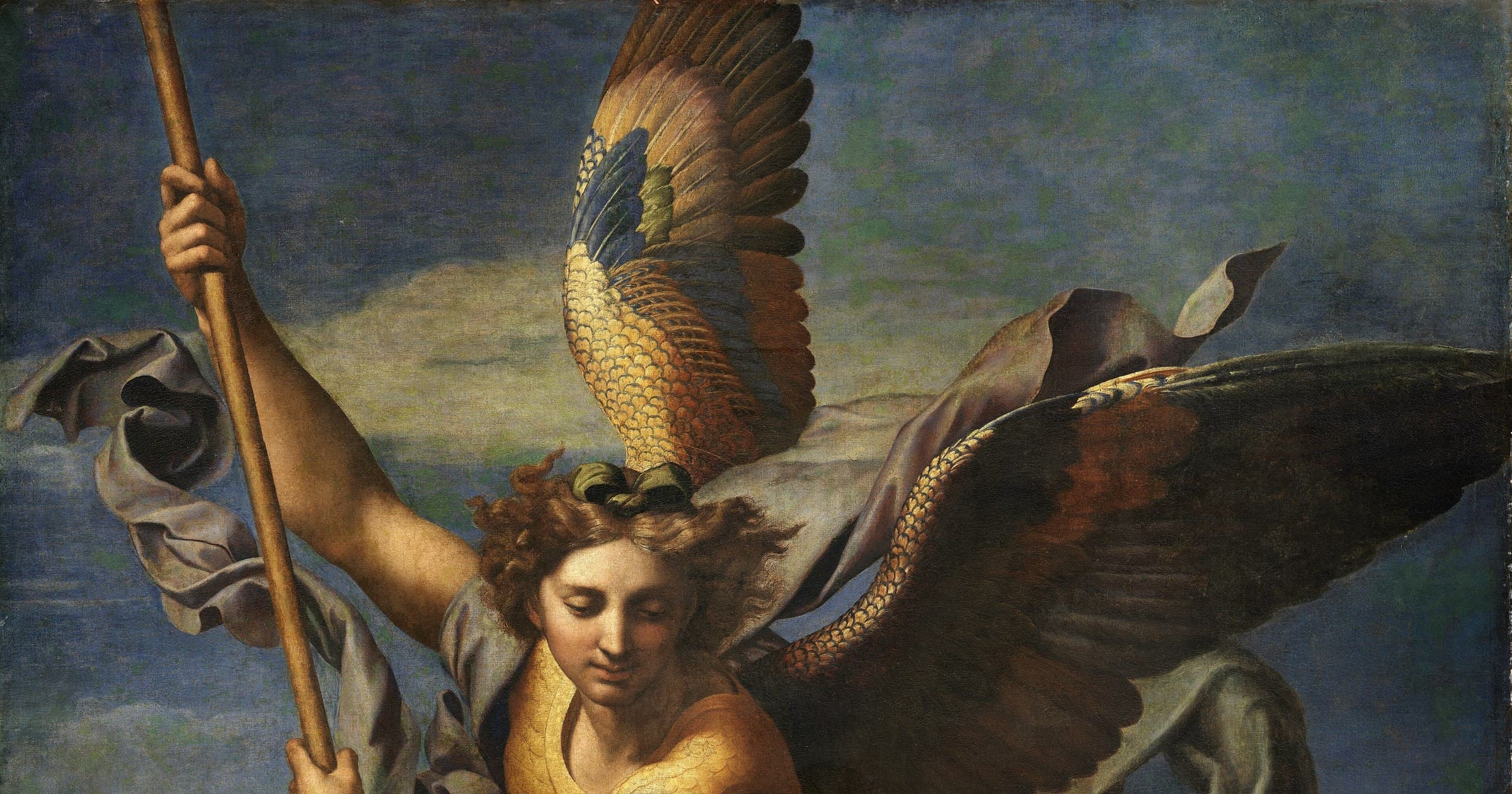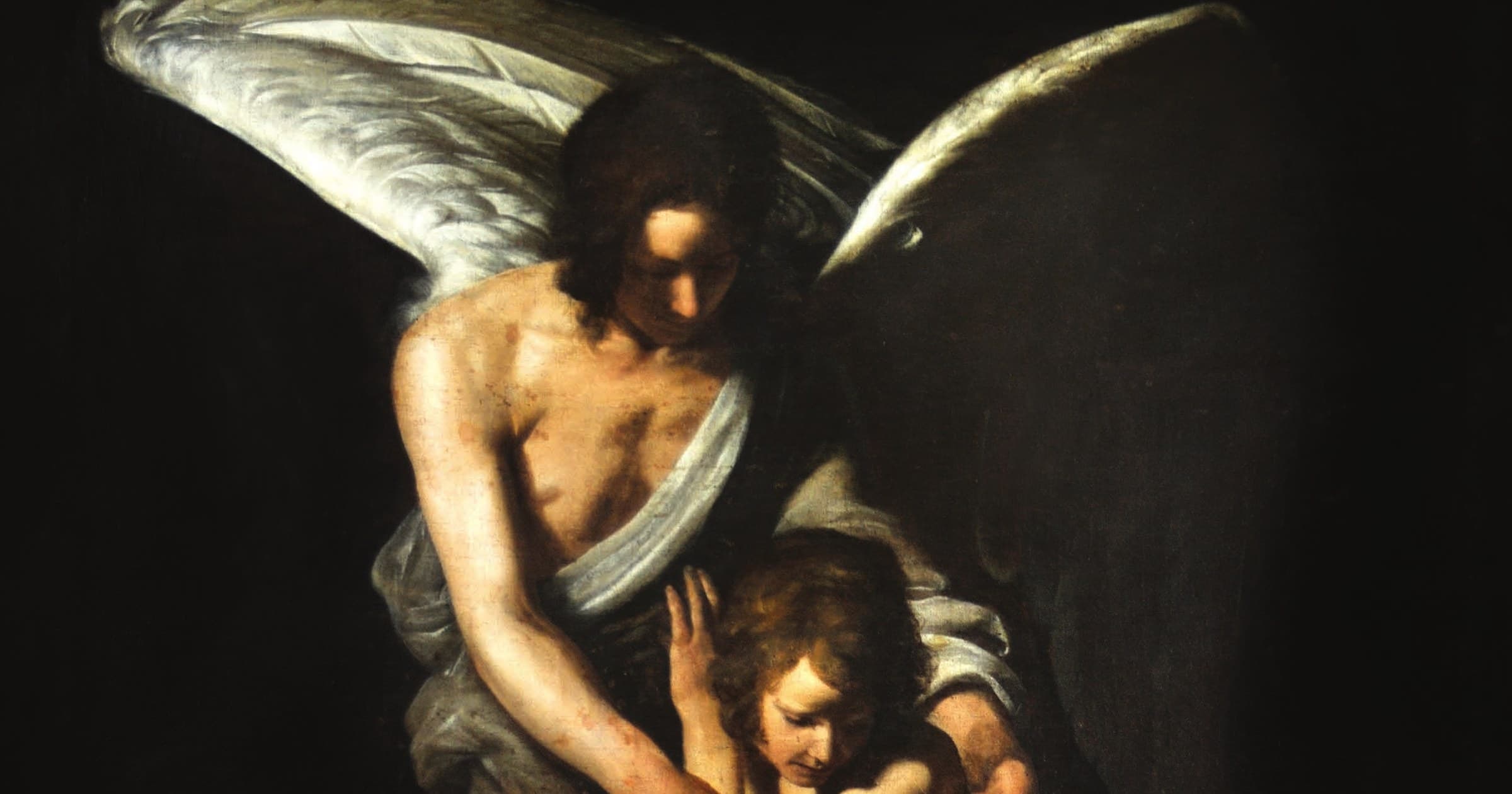

The Catholic mystic and poet Francis Thompson died of tuberculosis in 1907, and one of his best-known poems, ‘In No Strange Land’, was not published until the following year. It evokes the glory of God’s creation, which most of us cannot perceive, a theme we find in many Christian poets. The slightly earlier Jesuit poet Gerard Manley Hopkins notes that ‘The world is charged with the grandeur of God’ and demands to know ‘Why do men then now not reck his rod?’
Hopkins links the problem with the world of work and industry: ‘And all is seared with trade; bleared, smeared with toil’. Earlier, William Blake had seen the problem in terms of conflict with a scientific view of the world, though he was optimistic about how that conflict would end:
The Atoms of Democritus
And Newton’s Particles of Light
Are sands upon the Red Sea shore,
Where Israel’s tents do shine so bright.
Thompson’s view is similar. He described what has happened, for whatever reason, as a kind of ‘estrangement’: we have become estranged, alienated, no longer at home in the world that God has made so wonderfully. The world is as charged with God’s glory as ever, but we can no longer perceive it:
Not where the wheeling systems darken,
And our benumbed conceiving soars!—
The drift of pinions, would we hearken,
Beats at our own clay-shuttered doors.
The angels keep their ancient places;—
Turn but a stone and start a wing!
’Tis ye, ’tis your estrangèd faces,
That miss the many-splendoured thing.
The connection between the ‘wheeling systems’ of the cosmos and the place of angels brings to mind the worldview displaced by the Scientific Revolution: that the orbit of each of the planets was guided by an angel.
The involvement of angels in the ordinary operations of the natural world seems strange to the modern mind, but this is not something that medieval and early modern scholars contrasted with a more scientific view; it was simply how things worked. When Marlowe’s Doctor Faustus discusses the workings of the universe with the devil Mephistophilis, he asks, of the ‘spheres’ on which the planets orbit, ‘hath every sphere a dominion or intelligentia?’ It is dangerous ground for Faustus, who has sold his soul to Satan, because it puts him in mind of God, who made all this.
Shakespeare evokes the same worldview in The Merchant of Venice:
There’s not the smallest orb which thou behold’st
But in his motion like an angel sings,
Still quiring to the young-eyed cherubins;
Such harmony is in immortal souls;
But whilst this muddy vesture of decay
Doth grossly close it in, we cannot hear it.
Just as philosophers had always lamented our inability to hear the harmony of the spheres, so now the same reality of human life – Shakespeare’s ‘muddy vesture of decay’, Thompson’s ‘clay-shuttered doors’ – seems to prevent us from seeing even the more obvious thing: that God made and continues to inhabit the world with His angels.
The older worldview is sometimes described as ‘enchanted’, and it is said that the spell was broken by the Scientific Revolution, which explained things that could not previously be explained except by reference to supernatural causes. The suggestion, essentially, is that, in the medieval worldview, natural events were ascribed to miraculous or magical causation through ignorance. This is a distortion of the facts, however. Medieval, and indeed ancient, astronomers described the movement of the stars and planets in great detail, and were able to predict conjunctions and eclipses; they were similarly well versed in other laws of nature. They distinguished the effects of these things from miracles, which are brought about directly by God and which go beyond the workings of these laws.
The medievals nevertheless saw the workings of nature in the context of God’s creation. This was reinforced by a number of features of medieval science (to use an anachronism), notably the way it looked for explanations in terms of agents (living or not), rather than, as modern scientists do, seeing the natural world as a succession of events, each causing the next. The agents which cause things, on the medieval view, are perfectly natural; but at the same time we can more easily take a personal view of them, and even invoke them, or their guardian angels, in prayer.
If they answered our prayers, of course, this might indeed be a miracle, though usually it will be difficult to tell. The Catechism of the Catholic Church tells us that we should pray for all our desires and necessities (§2633): we do not hesitate to ask for something from God because natural causes are involved.
St John Henry Newman, in one of his Parochial and Plain Sermons, encourages us to recover the medieval vision, not seeing it as incompatible with modern scientific explanation: ‘all things continue and move on … by His will and power, and the agency of the thousands and ten thousands of His unseen Servants’.
To return to Thompson, like Newman he wished to superimpose this medieval vision of an angel-filled cosmos upon the mundane realities of an industrialised and urbanised Britain. Since students of nature are no longer pointing this out to us, it may be that our best chance of recovering this vision is in the context of suffering, which was such a feature of Thompson’s own life:
But (when so sad thou canst not sadder)
Cry;—and upon thy so sore loss
Shall shine the traffic of Jacob’s ladder
Pitched betwixt Heaven and Charing Cross.
Yea, in the night, my Soul, my daughter,
Cry,—clinging to Heaven by the hems;
And lo, Christ walking on the water,
Not of Genesareth, but Thames!