

The Third Sunday of Advent brings us face to face with the challenge of patience.
Patience acts as a bridge between two of our deepest but conflicting desires: the desire for love, and the desire for control. The gap between things as they are and things as they ought to be is often too wide for us to inhabit with any real comfort, and that gap becomes a source of constant disturbance.
On one side of it lies despair, as the longing for change overwhelms us and the pain of disorder and dysfunction grows too great to bear. On the other side lies a vision of what God is going to do — but God has committed himself to doing it through the medium of time, and through our willingness to surrender our hearts to him.
It is through penitence and a change of heart that God finds the means to put right the fissure between things as they are and things as he intends them to be. The temptation for all of us is to exercise control on our own behalf — to force the change ourselves. Politics and political analysis remain perpetually alluring because they offer the false promise that we can mend what is broken and put right what is wrong without any alteration in human nature, without the healing of the human person — something which lies beyond any power we possess.
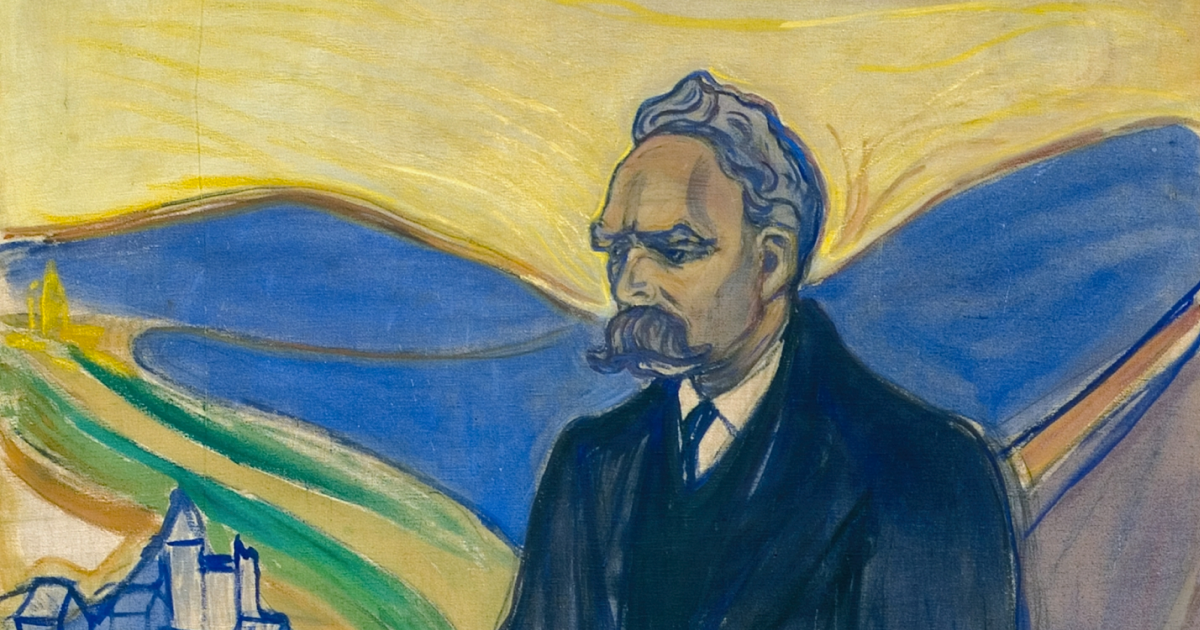
Isaiah begins with a picture of a desert. Many of those who have prayed and meditated on this chapter have understood the desert as a metaphor for their own hearts. The promise that deserts “out there” will blossom is a welcome one; after all, we find it far easier to be anxious about our external environment than about the aridity of our interior life.
Yet it is the human heart that God intends to change — from barrenness to fruitfulness — and he will do so by his Spirit, with our consent. The real change, from desert to orchard, is to take place in the human heart, in our heart. “The soul is desert until watered by the Word of God.” (Origen)
Isaiah is keenly aware that, in the absence of hope, fear and anxiety become contagious. We are reminded that without a vision the people perish. We need a vision of what God is going to do — both within us and, eschatologically, in all things.
And so Isaiah, who has seen the end, invites us to encourage one another: “Say to those who have an anxious heart, ‘Be strong; fear not.’ Behold, your God will come with vengeance.”
At first hearing, this sounds less comforting than alarming, but it is inseparably linked to God’s promise: “Vengeance is mine, says the Lord.” This is not an invitation to take judgement or punishment into our own hands, but to surrender them to the only one who can see clearly and judge truthfully.
God will come with both justice and mercy. The promise of justice comforts our outrage at the apparent triumph of hatred and evil, while the promise of mercy relieves us of the unbearable burden of self-righteousness. Before we cry out for justice for others, we must ask for mercy for ourselves — and Isaiah assures us that we shall receive it.
Looking through the mists of time, he promises joy and singing for those who hold fast, who preserve their love and patience until the end. “The human heart is cultivated not by force, but by patience.” (Gregory of Nyssa)
James, ever practical, exhorts us not only to patience but also to restraint — especially restraint of speech.
Grumbling is a form of precipitate judgement, one we are unable or unwilling to hold back. We observe the failures or shortcomings of others, point fingers, complain, and allow a low-grade accusation to take root. James knew, as we know now, that among the many sounds that emerge from the Church — praying, singing, proclaiming — one of them is grumbling. Very simply, he tells us not to do it.
Not only because it damages the Church and wounds those we complain about, but because it corrodes us. Jesus warned that the measure we give will be the measure we receive; the way we judge others will determine how we ourselves are judged. We would do well to grumble less about each other’s failures. “Nothing so destroys the Church as murmuring, for it trains the tongue in accusation rather than praise.” (St John Chrysostom)
The passage from Saint Matthew sets before us a dilemma of patient listening. Why does John the Baptist send messengers to Jesus? Has he been overcome by despair in prison as the end of his life approaches? Has doubt finally crept in?
It is difficult to believe this of John, even as his life draws to its tragic close. A more plausible reading is that John knows his own mission is ending and that his disciples must now transfer their allegiance — from him to Jesus, who is inaugurating the kingdom of heaven. St Jerome wrote: “John did not doubt for himself, but asked for his disciples.” So he sends them with their question in order that they may hear the answer from Jesus’ own lips and be prepared for the transition that lies ahead.
Jesus responds by pointing directly to Isaiah: “The blind receive their sight, the lame walk, lepers are cleansed and the deaf hear; the dead are raised up, and the poor have good news preached to them. And blessed is the one who is not offended by me.”
In a culture choosing between rival sources of authority and meaning, offence at Jesus is increasingly puzzling. What is there to be offended by except an invitation to acknowledge our dysfunction, our weakness, and to accept forgiveness?
When Jesus is placed alongside other claimants to human allegiance — Karl Marx or Mohammed, for example — the comparison falters quickly. This is not the place for a detailed assessment, but by any objective measure Jesus remains the most beautiful, compelling, demanding, and astonishing figure in human history. More than that, his life is consistent with everything he taught — something that cannot credibly be said of his competitors.
As we practise patience in whatever circumstances we inhabit, we are reminded that patience is not only how we manage the space between the world as it is and the world as it should be. God, too, is exercising patience with us.
Time — and the discomfort of time — is one of God’s great gifts. Through it, the Holy Spirit accomplishes in us the changes that must take place if, at the end of our lives, we are to find ourselves at home in the presence of God. “God could have created man perfect at once, but man was not yet able to receive it.” (St Irenaeus)
God uses time to irrigate the desert of the heart: to soften the obduracy of pride, to deepen our hunger, and to awaken in us a renewed need for his love and his mercy. “God does not delay his promises; rather, he enlarges our desire so that we may receive what he prepares to give.” (St Augustine)