

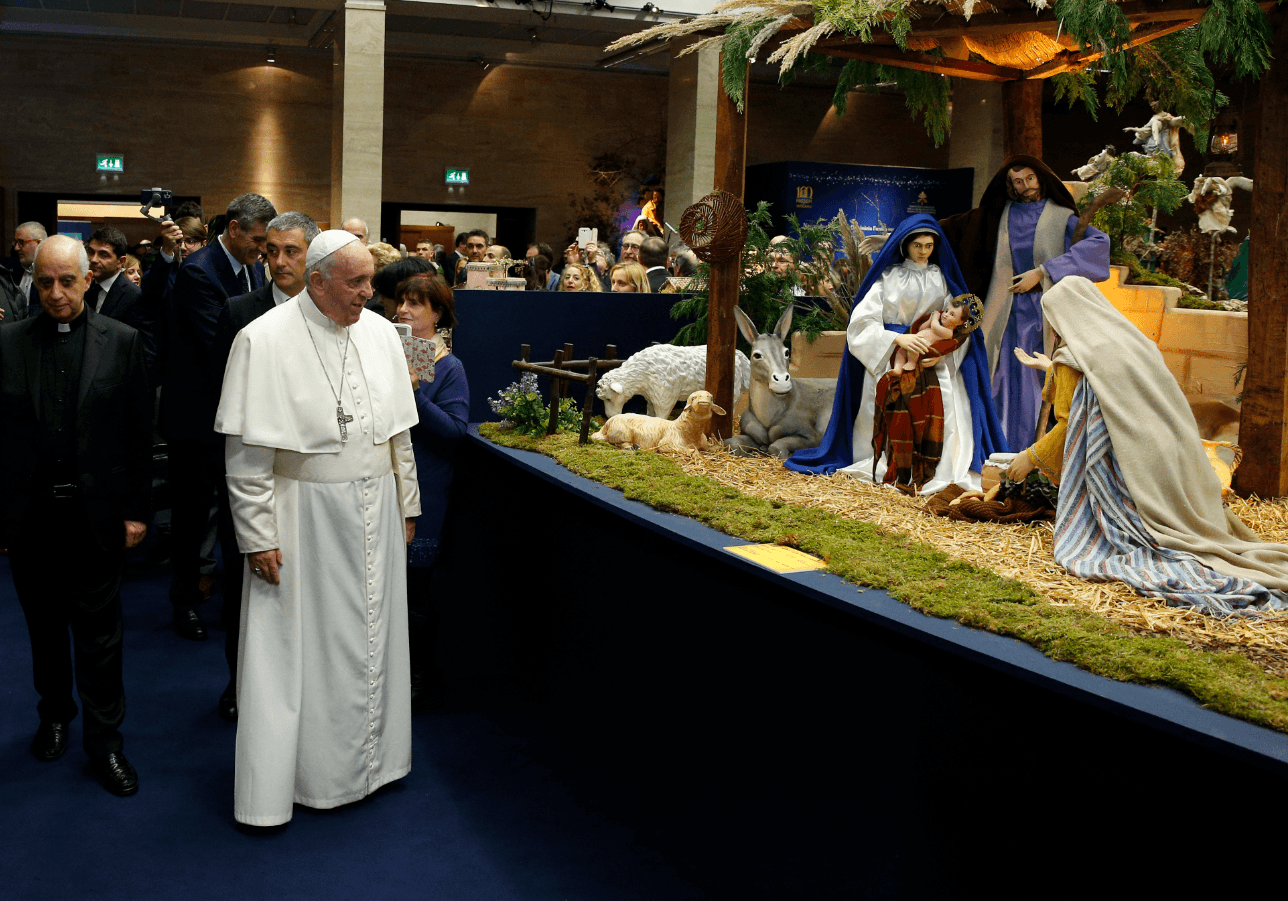
If you have a little time this season, consider picking up and reading – really reading – Pope Francis’s apostolic letter Admirabile signum, on the meaning and importance of the Nativity scene. It may be the best piece of writing he’s produced in his entire pontificate. Admittedly, there is a certain workmanlike quality to the essay. He tells you what he’s going to tell you, tells you, and tells you what he told you. Then he wraps it up. But he is on point, all the way through. “With this letter,” writes Francis, “I wish to encourage the beautiful family tradition of preparing the Nativity scene in the days before Christmas, but also the custom of setting it up in the workplace, in schools, hospitals, prisons and town squares.” Thus, Francis places his reflection within the framework of two great themes running through his pontificate: “private” devotion, publicly practised; and confident witness, presenting the faith as a public fact. The public practice of private devotion is properly called “popular” – and Francis has always promoted popular devotion. Speaking in 2015, for example, of Rome’s Corpus Domini procession, he said: “e have the joy not only to celebrate this mystery , but also to praise it and sing it through the streets of our City.” In the letter Pope Francis spends a little time rehearsing the origins of the Nativity scene tradition, noting that it was very much a public affair, and involved the highest form of the Church’s official public worship of the Triune God, who took on human flesh for our salvation.
12:00 AM
The Pope's Ignatian reflection on nativity scenes is well worth a read
if you have a little time this season, consider picking up and reading – really reading – pope francis’s apostolic letter admirabile signum,...
Christopher R. Altieri

5 min read



Already a subscriber? Sign in
5freearticles every month
Continue reading with a free account. No card needed.
- Five free articles every thirty days, on any device you sign in on
- The Catholic Herald newsletter, every morning
- Subscribe whenever you like for everything: every article and the magazine

subscribe to the catholic herald today
Our best content is exclusively available to our subscribers. Subscribe today and gain instant access to expert analysis, in-depth articles, and thought-provoking insights—anytime, anywhere. Don’t miss out on the conversations that matter most.
Subscribe



