January 23, 2026
January 23, 2026

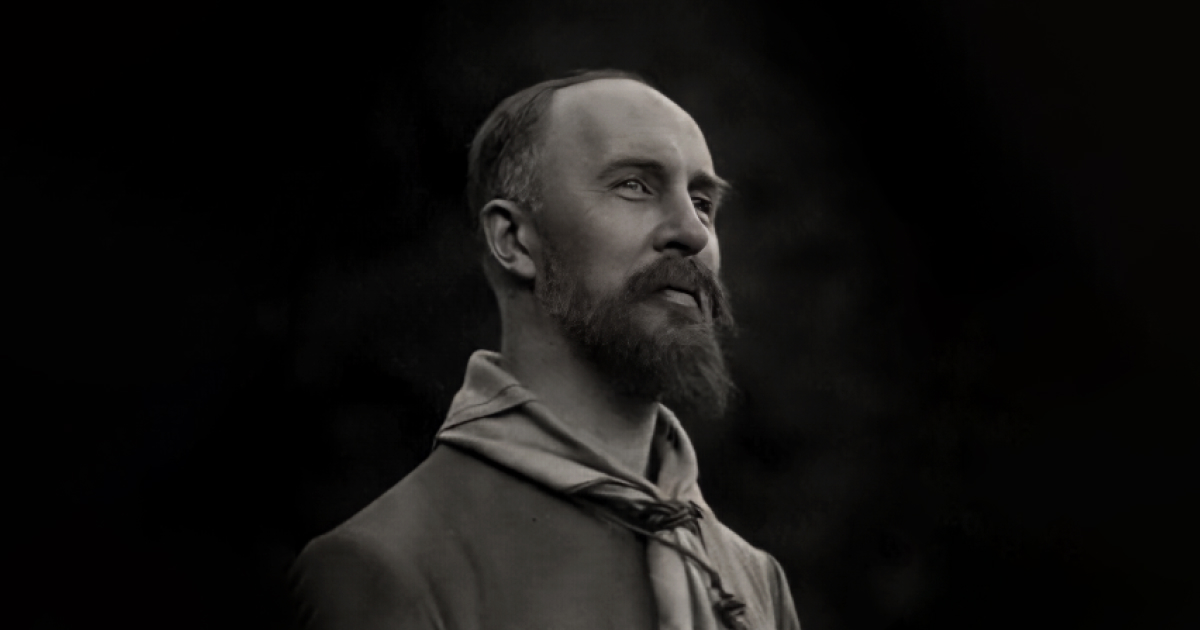
Father Sevin Jacques, the soul of Catholic Scouting

Min read
share

“Be ready when virtue calls for your effort,
Be ready to triumph over the eternal Deceiver,
Be ready each morning to receive my Body.
Be ready to forgive, for that is to prove that one loves,
Be ready to honour the God of your baptism,
And, if you walk alone, to walk straight nonetheless.
Be ready to offer yourself on an ordinary altar,
Be ready, like a true scout, to answer the call,
Be ready at every moment to depart for Heaven.”

These lines are taken from a poem, Be Ready, written by Father Jacques Sevin. From adolescence, his need for escape found an outlet in poetry. This love of words remained rooted in his heart throughout his life, and he would later use it to give scouts some of their most captivating songs.

Jacques Sevin was born in Lille in 1882 to devout Catholic parents. Within the family, he learned the importance of spiritual struggle against sin and of a life generously given. Several retreats with the Jesuits helped to confirm his emerging vocation to the priesthood and he entered the novitiate of the Society of Jesus on 3 September 1900. “To save my soul. To save souls. To have a rule, superiors, and a community life. Not to be vulgar,” he would later write.

Because of political anticlericalism, French religious congregations were forced into exile and the Jesuit novitiate moved to Belgium. While continuing his theological studies, Jacques Sevin completed a degree in English and became a teacher in various Jesuit colleges, discovering a passion for pedagogy. He spent several summers in the suburbs of London to perfect his English and it was here that he discovered Scouting.

Founded in 1907 by Baden-Powell, a British Army officer, Scouting spread rapidly to France. Protestants were the first to embrace the movement, yet most of the boys who joined were Catholic. Observing this, Abbé Cornette, vicar of Saint-Honoré-d’Eylau, judged it urgent to establish a similar Catholic movement and set up a scout inspired group in his Paris parish. Abbé Andréis in Nice also launched a similar initiative, despite the mistrust of many Catholics towards a movement founded by an Anglican.

Jacques Sevin was drawn to Scouting because he was concerned about renewing the pedagogical methods of the Society of Jesus. Jesuits had traditionally been educators, but he perceived a gap between the missionary spirit of the origins and everyday life in the colleges. Scouting could provide the means to recover something of the Ignatian intuition of an active, generous, and missionary education. Encouraged by his superiors, he travelled to England in the summer of 1913 to meet Baden-Powell and Cardinal Bourne, a major supporter of Scouting from the beginning. On his return, his decision was made. He wanted to found a Catholic scout movement in France.

Paradoxically, the war gave him the opportunity to develop his project. Ordained priest on 2 August 1914, on the eve of France’s entry into the First World War, Father Sevin was Declared unfit for military service and forced to remain in German occupied Belgium during the war, where he was able to devote himself to his great project.

He who had dreamed in his youth of travel and exploration, and who sought an effective educational system for the young people entrusted to him as teacher and priest, threw himself into Scouting with characteristic fervour.

Father Sevin worked on his first book, Scouting: Documentary Studies and Applications. In it, he set out how to establish a national Catholic movement. In 1917, he put his theoretical knowledge into practice by forming a small troop in occupied Belgium with refugee boys. Although entirely clandestine, since Scouting was banned by the German authorities, this first attempt was a success.

At that time, Father Sevin was the only person to have travelled to Great Britain to study Scouting. His knowledge of the language and English mentality helped him to discern what Scouting contained that was “specifically British and simply human”. After the war, he contacted Abbé Cornette. Their meeting proved decisive and on 1 March 1920, the abbé introduced the Jesuit to the small scouting circle in the capital. Father Sevin proposed uniting the various individual initiatives and founding a national Catholic group.

He argued that almost all of Baden-Powell’s scouting elements should be retained. Scouting possessed such educational power that it would be absurd and counterproductive, in his view, to deprive oneself of it. It simply needed to be given a Catholic spiritual meaning to complete it. Some, however, were reluctant to adopt an English movement without giving it a more French character but Sevin would not yield. The remaining resistance was overcome within a few weeks. Thus the National Catholic Federation of the Scouts of France was founded on 25 July 1920.

The new movement quickly gained momentum, despite continuing reservations. In 1922, after bringing together the various troop leaders, Father Sevin realised that the success of Scouting depended on the excellence of leader formation. Only well trained leaders could accompany children and help them draw the best from themselves. He therefore founded a journal, Le Chef, which offered technical, pedagogical, and spiritual articles. While this strengthened links between unit leaders and headquarters, it was insufficient for practical training.

Father Sevin therefore returned to England to attend the Gilwell Park training camp, founded by Baden-Powell. He returned with the title of Deputy Camp Chief and permission to open a training camp in France. In 1923, the first Scouts of France training camp was established at Chamarande, in Essonne.

On this large estate near Paris, scouts could now receive high quality formation. As a prudent leader, Father Sevin sent several chiefs to train at Gilwell Park, so that he would not be the sole conduit between the Scouts of France and the original movement. The female branch was not neglected. The Guides of France were founded in 1923 by Albertine Duhamel, under the patronage of Cardinal Dubois, Archbishop of Paris.

For ten years, Father Sevin devoted himself to the formation of male and female leaders. All those who passed through the Chamarande camp remembered with emotion the chapel built at its heart, with the Real Presence radiating constantly. They remembered the daily Mass that Father Sevin celebrated with such piety and fervour. One former participant described camp life as follows: “God was present at Chamarande. That was the secret of the camp’s very particular atmosphere. A confident and joyful life within God’s creation, a calm and singing atmosphere, poetry and work, a chivalrous sense of service, a constant reminder of the Scout Law, this deep unity within the diversity of tasks and activities, all of this was the incomparable work of Father Sevin.”

Slandered many times, Father Sevin was accused of religious indifferentism because of his closeness to Baden-Powell, who was Anglican. Reported to the Holy Office, he was summoned to the Vatican in 1925. He defended himself with ease and returned with the confidence of Pius XI. 

Father Sevin was declared Venerable in 2012. His faith and perseverance allowed him to realise his dream: offering French youth a path to holiness. As he liked to repeat, “They are scouts only in order to live as more perfect Christians.”

This article is reproduced with the kind permission of France Catholique.
“Be ready when virtue calls for your effort,
Be ready to triumph over the eternal Deceiver,
Be ready each morning to receive my Body.
Be ready to forgive, for that is to prove that one loves,
Be ready to honour the God of your baptism,
And, if you walk alone, to walk straight nonetheless.
Be ready to offer yourself on an ordinary altar,
Be ready, like a true scout, to answer the call,
Be ready at every moment to depart for Heaven.”

These lines are taken from a poem, Be Ready, written by Father Jacques Sevin. From adolescence, his need for escape found an outlet in poetry. This love of words remained rooted in his heart throughout his life, and he would later use it to give scouts some of their most captivating songs.

Jacques Sevin was born in Lille in 1882 to devout Catholic parents. Within the family, he learned the importance of spiritual struggle against sin and of a life generously given. Several retreats with the Jesuits helped to confirm his emerging vocation to the priesthood and he entered the novitiate of the Society of Jesus on 3 September 1900. “To save my soul. To save souls. To have a rule, superiors, and a community life. Not to be vulgar,” he would later write.

Because of political anticlericalism, French religious congregations were forced into exile and the Jesuit novitiate moved to Belgium. While continuing his theological studies, Jacques Sevin completed a degree in English and became a teacher in various Jesuit colleges, discovering a passion for pedagogy. He spent several summers in the suburbs of London to perfect his English and it was here that he discovered Scouting.

Founded in 1907 by Baden-Powell, a British Army officer, Scouting spread rapidly to France. Protestants were the first to embrace the movement, yet most of the boys who joined were Catholic. Observing this, Abbé Cornette, vicar of Saint-Honoré-d’Eylau, judged it urgent to establish a similar Catholic movement and set up a scout inspired group in his Paris parish. Abbé Andréis in Nice also launched a similar initiative, despite the mistrust of many Catholics towards a movement founded by an Anglican.

Jacques Sevin was drawn to Scouting because he was concerned about renewing the pedagogical methods of the Society of Jesus. Jesuits had traditionally been educators, but he perceived a gap between the missionary spirit of the origins and everyday life in the colleges. Scouting could provide the means to recover something of the Ignatian intuition of an active, generous, and missionary education. Encouraged by his superiors, he travelled to England in the summer of 1913 to meet Baden-Powell and Cardinal Bourne, a major supporter of Scouting from the beginning. On his return, his decision was made. He wanted to found a Catholic scout movement in France.

Paradoxically, the war gave him the opportunity to develop his project. Ordained priest on 2 August 1914, on the eve of France’s entry into the First World War, Father Sevin was Declared unfit for military service and forced to remain in German occupied Belgium during the war, where he was able to devote himself to his great project.

He who had dreamed in his youth of travel and exploration, and who sought an effective educational system for the young people entrusted to him as teacher and priest, threw himself into Scouting with characteristic fervour.

Father Sevin worked on his first book, Scouting: Documentary Studies and Applications. In it, he set out how to establish a national Catholic movement. In 1917, he put his theoretical knowledge into practice by forming a small troop in occupied Belgium with refugee boys. Although entirely clandestine, since Scouting was banned by the German authorities, this first attempt was a success.

At that time, Father Sevin was the only person to have travelled to Great Britain to study Scouting. His knowledge of the language and English mentality helped him to discern what Scouting contained that was “specifically British and simply human”. After the war, he contacted Abbé Cornette. Their meeting proved decisive and on 1 March 1920, the abbé introduced the Jesuit to the small scouting circle in the capital. Father Sevin proposed uniting the various individual initiatives and founding a national Catholic group.

He argued that almost all of Baden-Powell’s scouting elements should be retained. Scouting possessed such educational power that it would be absurd and counterproductive, in his view, to deprive oneself of it. It simply needed to be given a Catholic spiritual meaning to complete it. Some, however, were reluctant to adopt an English movement without giving it a more French character but Sevin would not yield. The remaining resistance was overcome within a few weeks. Thus the National Catholic Federation of the Scouts of France was founded on 25 July 1920.

The new movement quickly gained momentum, despite continuing reservations. In 1922, after bringing together the various troop leaders, Father Sevin realised that the success of Scouting depended on the excellence of leader formation. Only well trained leaders could accompany children and help them draw the best from themselves. He therefore founded a journal, Le Chef, which offered technical, pedagogical, and spiritual articles. While this strengthened links between unit leaders and headquarters, it was insufficient for practical training.

Father Sevin therefore returned to England to attend the Gilwell Park training camp, founded by Baden-Powell. He returned with the title of Deputy Camp Chief and permission to open a training camp in France. In 1923, the first Scouts of France training camp was established at Chamarande, in Essonne.

On this large estate near Paris, scouts could now receive high quality formation. As a prudent leader, Father Sevin sent several chiefs to train at Gilwell Park, so that he would not be the sole conduit between the Scouts of France and the original movement. The female branch was not neglected. The Guides of France were founded in 1923 by Albertine Duhamel, under the patronage of Cardinal Dubois, Archbishop of Paris.

For ten years, Father Sevin devoted himself to the formation of male and female leaders. All those who passed through the Chamarande camp remembered with emotion the chapel built at its heart, with the Real Presence radiating constantly. They remembered the daily Mass that Father Sevin celebrated with such piety and fervour. One former participant described camp life as follows: “God was present at Chamarande. That was the secret of the camp’s very particular atmosphere. A confident and joyful life within God’s creation, a calm and singing atmosphere, poetry and work, a chivalrous sense of service, a constant reminder of the Scout Law, this deep unity within the diversity of tasks and activities, all of this was the incomparable work of Father Sevin.”

Slandered many times, Father Sevin was accused of religious indifferentism because of his closeness to Baden-Powell, who was Anglican. Reported to the Holy Office, he was summoned to the Vatican in 1925. He defended himself with ease and returned with the confidence of Pius XI. 

Father Sevin was declared Venerable in 2012. His faith and perseverance allowed him to realise his dream: offering French youth a path to holiness. As he liked to repeat, “They are scouts only in order to live as more perfect Christians.”

This article is reproduced with the kind permission of France Catholique.
subscribe to
the catholic herald

Continue reading your article with a subscription.
Read 5 articles with our free plan.
Subscribe
share

subscribe to the catholic herald today

Our best content is exclusively available to our subscribers. Subscribe today and gain instant access to expert analysis, in-depth articles, and thought-provoking insights—anytime, anywhere. Don’t miss out on the conversations that matter most.
Subscribe