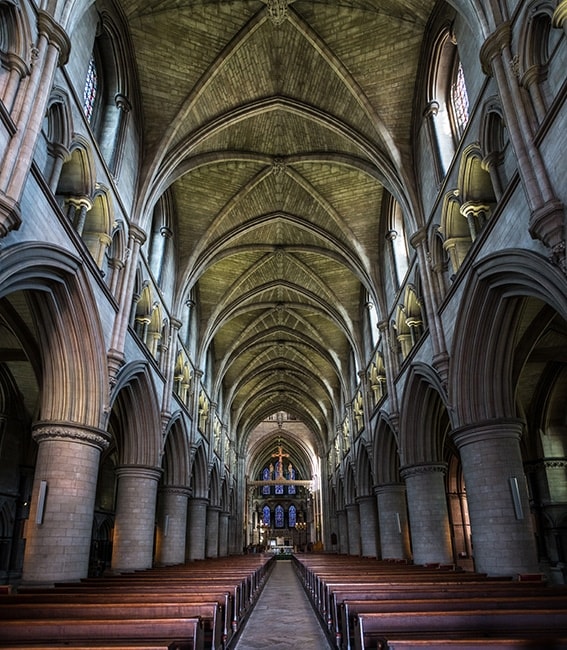



Norfolk was known in the Middle Ages for its great holiness, with streams of pilgrims making their way in particular to Bromholm to venerate the Holy Rood, and to Walsingham where Our Lady had appeared to a noblewoman called Richeldis of Faverches in 1061. The county was adorned with large numbers of striking parish churches, which survive to this day in Anglican hands, usually in rather austere condition.
After the Reformation, Norfolk became a great centre of nonconformity, providing large numbers of men to the parliamentary army in the English Civil War. Catholicism survived mainly through the protection of Catholic landowners such as the Bedingfelds at Oxburgh, the Jerninghams (Barons Stafford 1825-1913) at Costessey and the Howard Dukes of Norfolk, with their palace in Norwich and their estates centred at Kenninghall in the county.