


May 25, 2026

The witness of Jacques Fesch

Archbishop John Wilson
More
Related
Min read
share

I Wait in the Night: The Death Row Journal of Jacques Fesch. Translation and commentary by Fr Rupert Allen (Our Sunday Visitor, 2025)

Out of the blue, some months ago, a woman living near Archbishop’s House in Southwark contacted me about Jacques Fesch. She knew I had mentioned him in homilies and was herself fascinated by his story. It seems that everyone who encounters Jacques shares this sense of captivation. This is true, not least, of Fr Rupert Allen, Cong. Orat., who has gifted the English-speaking world with a translation and commentary of Jacques’s Death Row Journal.
I Wait in the Night is a phrase written by Jacques while facing imminent execution. Fr Rupert’s expert rendering of Jacques’s remarkable testimony conveys the dramatic dynamic of grace operative within a convicted murderer’s heart.

Born on April 6, 1930, in a Paris suburb, Jacques’s complex family background, teenage rejection of Catholicism, promiscuity and infidelity left him dissatisfied with life and looking for escape. He planned to sail to the South Pacific, but lacked the necessary funds. A bungled robbery on February 24, 1954, ended when Jacques was apprehended for shooting and killing a policeman. Imprisoned from that day until he was guillotined on October 1, 1957, his confinement was transformational. Jacques’s encounter with the person of Christ brought the knowledge that he was loved, but also the desire to love in return. The Gospel came alive, redemption became real, and reconciliation was possible.

With great skill, I Wait in the Night presents Jacques to us as a modern-day Dismas, the Good Thief who asked the Lord Jesus on the Cross to remember him in his kingdom. Fr Rupert charts Jacques’s intellectual awakening to Catholic belief through the encouragement of his prison chaplain and lawyer. It was, however, a supernaturally infused gift of faith that brought Jacques’s ‘spiritual conversion’, when, in his words, ‘the spirit of the Lord seized me by the throat’.

Fr Rupert shares with us Jacques’s own report concerning his trial, written at the request of his chaplain. We hear from a man more erudite than his previous schooling and behaviour would suggest. Jacques never denied his guilt for murder, nor his duty to face the consequences of his crime. He was not, however, a premeditated assassin. Only in the ‘light of faith’ could he accept his cross, meeting Christ, who, as he put it, speaks ‘in the solitude of a cell… more distinctly perhaps than anywhere else’.

It is for the main substance of the book – the first English translation of Jacques’s Death Row Journal – that we owe sincere gratitude to Fr Rupert. Before his arrest, Jacques had married Pierrette in a civil ceremony and, with her, had a daughter, Véronique. Shortly before his death, the marriage was regularised by the Church. He also had an affair and fathered a son, Gérard. It was to his daughter that Jacques addressed his journal, written in La Santé prison in Paris. For her, and by implication for Gérard, he wrote his apologia pro vita sua, an account of himself; not so that he might be excused, but in order, more properly, to be understood. Absolutely pivotal to this was the potency and beauty of his Catholic faith.

In words that are spiritual, theological, psychological and even mystical, we hear first-hand what it meant for God to take possession of Jacques’s soul, ‘not sparingly, but with the generosity of a great Lord’. With honesty and humanity, Jacques shares his intensifying interior journey through daily journal entries from August 3 to September 30, 1957, before being executed early on October 1, then the feast day of St Thérèse of Lisieux. His love for the Mass and desire to receive Holy Communion as often as possible leaps from the pages. His trust in Our Lady and devotion to the rosary became essential to his daily prayer. Jacques quotes from spiritual writers of his day, including extensively from the Dominican Fr Marie-Joseph Ollivier about the Passion and Crucifixion of Jesus. Clearly, he needed to offer his life in a manner befitting the Lord’s own death.

Jacques experienced the ‘hide and seek’ of God’s presence. Even when feeling abandonment, he is certain that ‘little Jesus’, the one who makes himself small for us, will lift his heart. Consoled by the spiritual friendship of the saints, he turns especially to St Thérèse, St Jean-Marie Vianney and St Jane Frances de Chantal. Temptation is never far away, but a growing self-denial and desire to give all, even when challenging, makes Jacques a worthy contemporary companion in discipleship. Everything we receive inspiringly from Jacques is insightfully accompanied by Fr Rupert’s short commentaries on each journal entry.

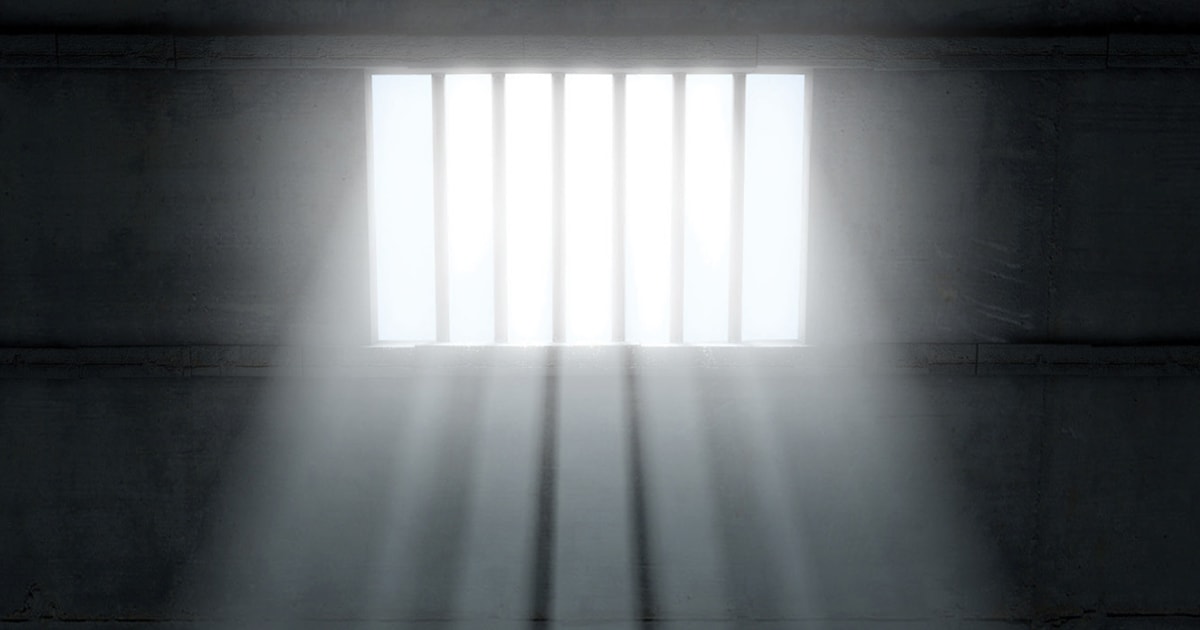
Jacques offers spiritual friendship to anyone trying to make sense of themselves. His witness to Christ and the Catholic faith shines through his unvarnished authenticity. Jacques’s heavenly patronage reaches all who feel trapped, for whatever reason. All of this is relayed in 214 pages, crafted by Fr Rupert to ignite our own inner yearning. Just hours before his execution, Jacques wrote, ‘Blessed is he who puts his trust in the Lord. He will never be put to shame.’ Through his Death Row Journal, Jacques invites us to enter his prison cell. From there, he guides us in hope to the truth of the empty tomb and the promise of paradise.

The Most Rev John Wilson is Archbishop of Southwark, United Kingdom.

Continue reading with a free account

Create a free account to read up to five articles each month
Create free account

You have # free articles remaining this month.

Subscribe to get unlimited access.
Sign up

subscribe to the catholic herald today

Our best content is exclusively available to our subscribers. Subscribe today and gain instant access to expert analysis, in-depth articles, and thought-provoking insights—anytime, anywhere. Don’t miss out on the conversations that matter most.
Subscribe