


On Christmas Day the United States launched strikes against militants linked to the Islamic State in Nigeria’s Sokoto state, in the north-west of the country, where militants have sought to establish a foothold.
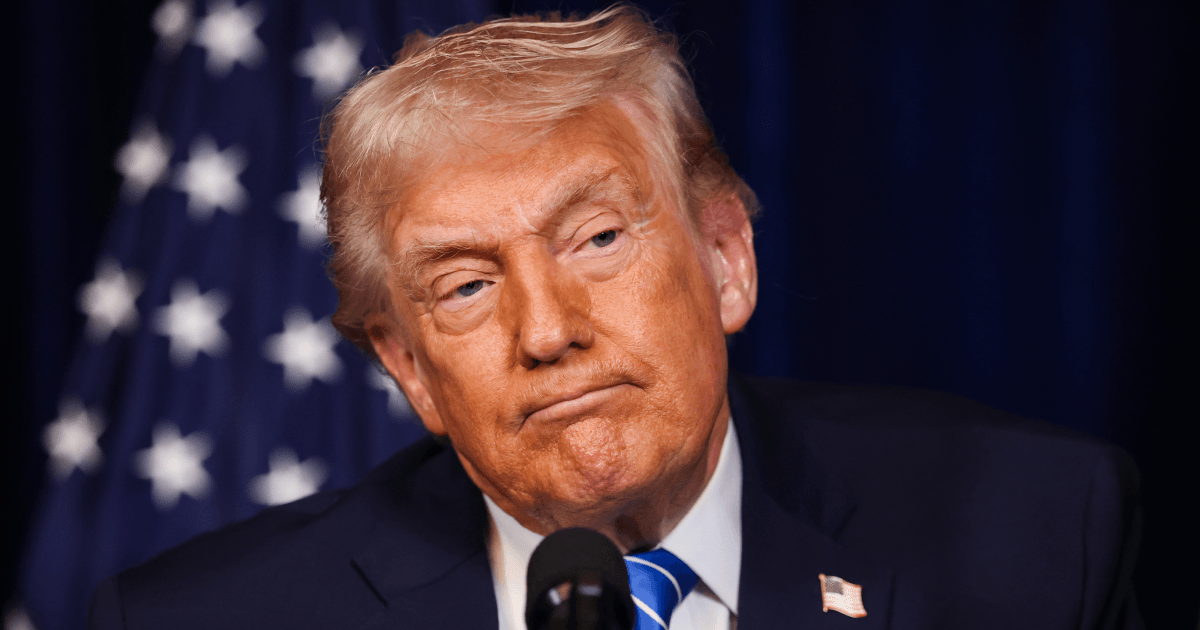
President Trump’s response was triumphant. He described the strikes as “deadly”, labelled the terrorist group they targeted as “scum who have been targeting and viciously killing, primarily, innocent Christians”, and referred to the attack as a “Christmas present”. Nigeria was more cautious, with its foreign minister emphasising that the operation was a joint endeavour that had “nothing to do with a particular religion” and stating that it did not have “anything to do with Christmas”.
Parts of the secular media responded in a predictably bizarre manner. The BBC, highly suspicious of anything that might look like protecting Christians, used cautionary language. Noting that it was Islamic State on the receiving end of the attack, the broadcasting company suggested that the administration was merely “accusing” the group of acting against Christians, adding that “the BBC has found that some of the data being relied on to come to this conclusion are difficult to verify”.
The Guardian explained the background to the military intervention by pointing out that “violence against Christians has drawn significant international attention”. It continued by adding the qualification that it was being “framed as religious persecution”, apparently unaware that violence against a particular religious group is, by definition, religious persecution, framed or otherwise. The paper also quickly commissioned an op-ed which went so far as to suggest that the action risked “fanning the flames of insurgent violence”.
However, despite these disparaging comments, it is likely that this military intervention will have effects beyond Nigeria’s embattled Christian community. According to recent data, more than 380 million Christians suffer high levels of persecution and discrimination for their faith. That represents one in seven Christians worldwide, rising to one in five in Africa.
Currently, eight of the ten deadliest places for Christians are in sub-Saharan Africa. Nigeria is almost entirely surrounded by countries with high levels of Christian persecution, with Niger, Chad, Burkina Faso and Cameroon all among the top fifty countries with the highest levels of violence against Christians, according to the advocacy group Open Doors.
In Burkina Faso, the al-Qaeda affiliate Jama’a Nusrat ul-Islam is thought to exercise control over as much as 40 per cent of the country, making the practice of Christianity essentially impossible across large parts of the landlocked state. Whether the government is doing enough to counter the actions of the terrorists is questionable. Following the 2022 military coup, it ended military cooperation with France and reduced engagement with other Western states, yet its own intervention has proved ineffective. The leader of Jama’a Nusrat ul-Islam, Iyad Ag Ghaly, emboldened by recent gains, has publicly called on his group to continue its assaults.
In Somalia, thousands of miles away on the east coast of Africa, the picture is similar. Al-Shabab, another terrorist group linked to al-Qaeda, dominates around 40 per cent of the country, and Christians are routinely murdered for their faith. Even in areas under government control, practising Christianity is near impossible, and the state does little to protect the tiny Christian population.
In the north of the continent, Libya’s Christian community is also subjected to jihadist violence, with a notably compliant government looking on. In March 2023 Libya’s Internal Security Agency went as far as rounding up Christians, including foreign nationals, arresting them on grounds of “apostasy” and “conducting missionary work”.
In Asia the situation for Christians is even worse, with two in five experiencing persecution. Iran and Saudi Arabia predictably appear among the twenty worst places for Christians to live, but more surprising is the inclusion of India. The world’s second most populous country has seen a rise in persecution of religious minorities as Hindu nationalists have been emboldened by Prime Minister Narendra Modi’s political dominance. India has also witnessed a mass exodus from Hinduism among groups historically regarded as “untouchable”. Many have converted to Christianity, with local governments responding by deploying anti-conversion laws that disproportionately target Christians.
The grounds for US intervention in Nigeria were primarily that a religious minority was facing sustained violence while the state was either unable or unwilling to intervene. Yet the situation is far from unique. Millions of Christians around the world live under similar conditions, persecuted and ignored by the international news cycle, in part because speaking openly about Christian persecution does not fit prevailing narratives.
Nigeria is a particular case in that it is Africa’s most populous country, with the continent’s largest economy and a vast international diaspora. Through Nollywood and artists such as Burna Boy, Nigeria exerts cultural influence far beyond its borders, creating a sense of proximity in the Western imagination. In that sense, it is unsurprising that the persecution of Nigerian Christians became an international talking point. It is equally unlikely to be the last.
What was striking in Nigeria’s case was how quickly initial concern turned into public outrage and then into accountability and intervention. Nigeria’s government and much of the media narrative sought to frame the violence as “deeply complex” and to resist interpretations that emphasised religious motivation. Trump’s intervention cut through that framing. Public condemnation followed, amplified by figures such as Nicki Minaj and a cohort of NFL players, culminating in military action. The entire process took less than two months.
Whether in Burkina Faso, India, or any of the many countries where Christians face persecution while governments respond weakly or not at all, Nigeria will serve as a warning. Trump’s intervention signals that states which fail to act may find that others will act for them.