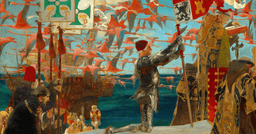
In AD 494, Pope Gelasius I wrote a letter to the Byzantine Emperor Anastasius I that would shape Christian political thought for over a millennium.
The occasion was the Acacian Schism, a dispute in which the emperor had backed a theological compromise with the Monophysite heretics and expected the Church to fall into line and comply. Gelasius refused. In his letter, known by its opening words Duo Sunt, he articulated the foundational Catholic doctrine on the relationship between spiritual and temporal authority:
‘There are two powers by which this world is principally ruled: the sacred authority of pontiffs and the royal power. Of these, that of the priests is the more weighty, since they have to render an account for even the kings of men in the divine judgement.’
Gelasius did not believe in a separation of church and state in the modern liberal sense, but a distinction between two powers ordained by God for different purposes within a unified Christian order. As Dr Andrew Willard Jones argues in Before Church and State, for centuries Catholic theologians saw no distinction between the church and the state. As Christians, princes rule their realms as members of the church over other members.
Since it governs eternal destiny, the spiritual power necessarily holds primacy over the temporal. Later theologians, most notably Bernard of Clairvaux and Pope Boniface VIII in Unam Sanctam, would develop this teaching further, arguing that both swords ultimately belong to the Vicar of Christ: the spiritual sword wielded directly by the Church, the temporal sword wielded by princes under the Church’s moral direction.
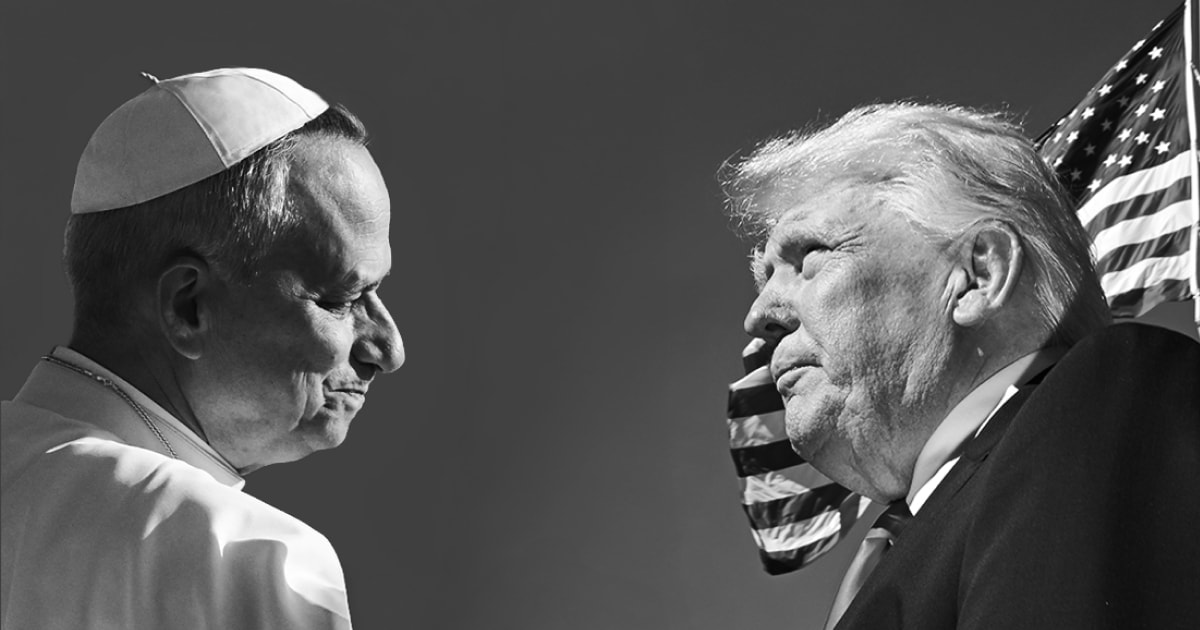
Since its first articulation, this doctrine has been the source of countless conflicts between popes and Christian princes. On Sunday, another chapter in that conflict played out on social media. President Donald Trump, in a lengthy post on his social media platform Truth Social, called Pope Leo XIV ‘WEAK on Crime’ and ‘terrible for Foreign Policy’. He suggested Leo owes his pontificate to Trump’s presidency. He told the Pope to ‘stop catering to the Radical Left’ and focus on being ‘a Great Pope, not a Politician’.
Pope Leo, speaking to reporters, responded: ‘I have no fear of the Trump administration, or of speaking out loudly about the message of the Gospel.’ He declined to debate the president, stating simply: ‘I am not a politician.’
For years, the relationship between the Vatican and the White House operated through implication. Pope Francis made veiled references to President Trump, like his famous ‘build bridges, not walls’ comment. During his term, President Biden largely waved off the obvious conflict between his Catholicism and his support for crimes like abortion. The subtlety was comfortable – but also dishonest.
That era is over. A Pope and a head of state are now in open, public disagreement. Still, Catholics should not be alarmed by this. Despite the new weapons and new forms of communication, this is a return of the ancient and recurring tension between the two swords. Instead, Catholics should use this as an opportunity to discuss how to treat these tensions when they inevitably arise.
The tension between the two swords repeats because the underlying dynamic never changes: temporal power, by its fallen nature, seeks to subordinate spiritual authority to its own purposes.
It is a lot like the tension between a man’s body and his soul. The body and soul are distinct powers meant to cooperate towards a single end, with the soul rightly governing the body. But since the Fall, the body wages war against the soul, asserting its appetites over what reason and faith know to be true. So it is with temporal and spiritual authority. The temporal sword, rightly wielded, serves the purposes of the spiritual. But the temptation of power is always to reverse this order and demand that the Church conform to the agenda of the prince rather than the prince conform to the teaching of the Church.
Saint Augustine’s distinction between the City of God and the City of Man provides the proper framework. A ruler who orders his power towards the worship of God and the common good brings his nation into the City of God. A ruler who orders his power towards pride, appetite or self-glorification builds the City of Man within his borders. Families, communities and nations perpetually stand at this crossroads.
On the substance of the present conflict, Pope Leo’s position is unimpeachable. The Pope has a duty to speak on matters of war and peace. The Kingdom of God, as Isaiah prophesied, is one in which swords are beaten into ploughshares and nations no longer train for war (Is 2:4). The eschatological horizon of Christianity is peace. The Pope, as Vicar of Christ, bears the responsibility of making that Kingdom present in the world. That is the spiritual sword in action.
War, in Catholic moral theology, is at best a remedial good permitted under strict conditions, never celebrated, always oriented towards the restoration of a just peace. Even the wars commanded by God in the Old Testament were remedial, ordered towards the establishment of the covenant people in the Promised Land or its protection. One may argue that the war in Iran meets the criteria of a just war. One may not argue that the Pope is wrong to call for peace. That is his office. While war may protect the City of God from an attack by the City of Man, only peace truly advances the City of God.
The more uncomfortable question for Catholic Trump supporters is not whether the Pope should speak on foreign policy. It is whether they have reckoned honestly with the ways this administration promotes the City of Man.
President Trump has signed executive orders expanding access to IVF and called himself ‘the father of IVF’, a procedure that involves the destruction of human embryos and violates the dignity of the conjugal act. He has capitulated entirely on the legal recognition of so-called same-sex marriage. These allowances led to his achieving widespread support, but are direct offences against the moral order and characteristic of the City of Man.
Catholics ought to support their political leader insofar as he advances the conditions for the City of God to flourish: the protection of religious liberty, the defence of the vulnerable and the promotion of the common good. We ought to vote for the politicians most likely to bring our nation to that City. That leader may very well be Donald Trump. But Catholics must also resist, publicly and without equivocation, any leader insofar as he promotes the City of Man, regardless of party affiliation.
The Church existed before the American republic and will endure long after. Both swords belong to Christ. Catholics need not fear saying so, even when the prince objects.
Patrick Neve is a former comedian with a Master’s degree in systematic theology.


.jpg)