Catholics acquainted with the Catechism might well be forgiven for professing a certain degree of confusion in recent days, as a Vatican commission declaring the impossibility of women accessing the diaconate became major news in the Catholic world.
Why the need for such a declaration, one might ask, given that the Church already possesses a great wealth of clear teaching on this matter?
To answer this, one must first assess exactly what the commission said, examine what the Church has already taught on the subject, and ascertain why this issue is being discussed today.
On December 4, the Cardinal Giuseppe Petrocchi commission – set up in April 2020 – issued a summary of their studies on the question of women’s access to the diaconate. After five years of work, the commission’s key conclusion thus far appeared in these lines:
“The status quaestionis of historical research and theological investigation, as well as their mutual implications, rules out the possibility of moving in the direction of admitting women to the diaconate understood as a degree of the sacrament of Holy Orders. In light of Sacred Scripture, Tradition, and the Church’s Magisterium, this assessment is strongly maintained, although it does not at present allow for a definitive judgment to be formulated, as is the case with priestly ordination.”
Petrocchi’s first sentence is no revelation. The reservation of the threefold sacrament of Holy Orders to men, deacon, priest, and bishop, as defined in canon law, is taught at every level of the Church.
Canon 1024 states succinctly that “a baptised male alone receives sacred ordination validly”, and the Congregation for the Doctrine of the Faith’s Inter Insigniores notes that so basic was the teaching of the male only sacrament of Orders through the centuries that “the Magisterium has not felt the need to intervene in order to formulate a principle which was not attacked, or to defend a law which was not challenged”.
Referencing centuries of prior teaching, Pope John Paul II wrote in his 1994 apostolic letter Ordinatio Sacerdotalis that “the Church has no authority whatsoever to confer priestly ordination on women and that this judgment is to be definitively held by all the Church’s faithful”.
Two separate prefects of the Congregation for the Doctrine of the Faith outlined that this teaching bore the mark of infallibility and that “the Church does not have the power to change the substance” of male only Holy Orders.
John Paul II “formally confirmed and made explicit, so as to remove all doubt, that which the Ordinary and Universal Magisterium has long considered throughout history as belonging to the deposit of faith”, explained Cardinal Ladaria Ferrer in 2018.
Even Pope Francis, who allowed the movement advocating for a female diaconate to gain momentum, stated clearly in his apostolic exhortation Evangelii Gaudium that “the reservation of the priesthood to males, as a sign of Christ the Spouse who gives himself in the Eucharist, is not a question open to discussion”.
That there is categorically no ability for the Church to establish a female diaconate is beyond question, since it would reject the very nature of the sacraments instituted by Christ.
Petrocchi’s commission does not pretend to be anything more than what it is. It has no legislative or binding authority. However, the line in which Petrocchi argued that it was not currently possible “for a definitive judgment to be formulated” is curious and arguably erroneous, given the formal and definitive pronouncements by the Church on the matter outlined above.
It is a line which has the potential to concern those eager to preserve Church teaching and will certainly further embolden those advocating for women to enter Holy Orders.
Indeed, it is precisely because of such activists that the commission was convened in the first place. Pope Francis first tasked a commission in 2016 to examine the question of a female diaconate. Led by the then prefect of the Congregation for the Doctrine of the Faith, Cardinal Ladaria Ferrer SJ, the twelve member commission included both advocates and opponents of women deacons but never released its findings.
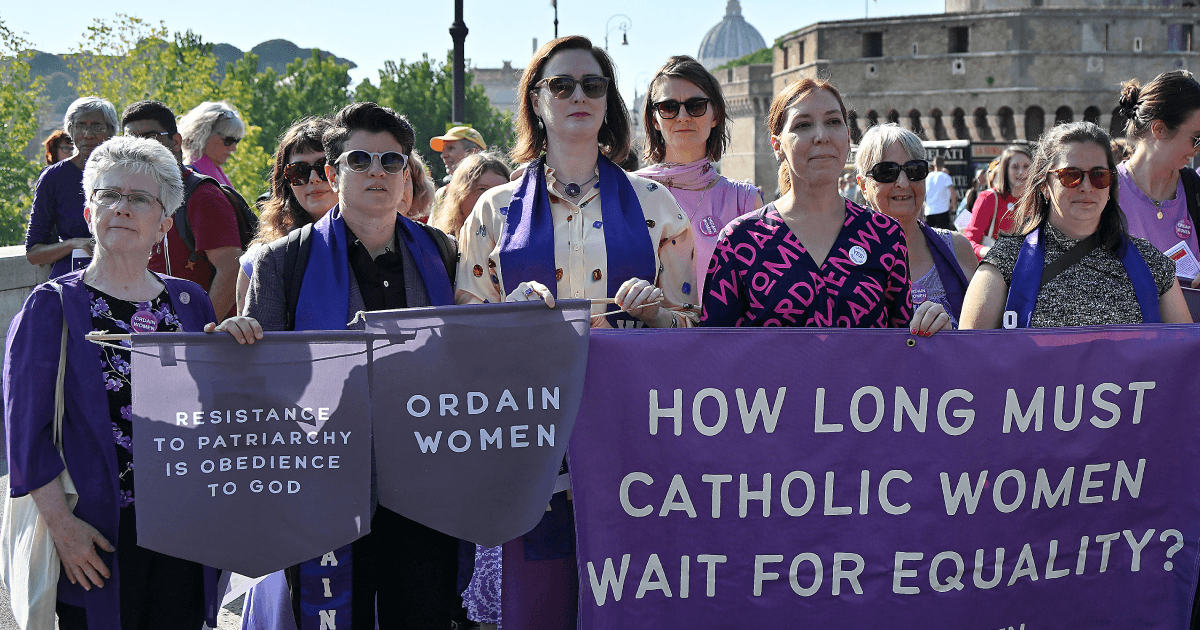
Against the backdrop of heterodox campaign groups such as the Women’s Ordination Conference, and the wider momentum connected to the Synod on Synodality promoted by certain vocal groups and individuals, there was a renewed push for a female diaconate, including by some cardinals. This led to the establishment of the Petrocchi commission in 2020.
During the two Vatican sessions of the Synod in 2023 and 2024, the issue quickly became one of the leading topics of debate, raised by journalists at several press conferences and, we were told, frequently mentioned from the Synod floor. One of the ten study groups established as a result of the Synod was tasked with re examining the topic due to reported interest from Synod members.
At the same time, the Vatican pushed back. Cardinal Victor Manuel Fernández, leading the study group in question, informed the Synod that “there is still no room for a positive decision by the Magisterium regarding the access of women to the diaconate, understood as a degree of the Sacrament of Holy Orders”.
Australia’s Bishop Anthony Randazzo also responded forcefully. The clamour for female deacons derives from “a small minority, with a large powerful Western voice, obsessed with pushing this issue”, he said during a press conference.
Nevertheless, the study continued until the publication of the Petrocchi commission’s summary. Damning, because not only did the commission accurately cite the constant judgment of Tradition and Doctrine against the ordination of women, but it also shed light on the true scale of the activist movement.
“Although there were numerous contributions,” Petrocchi wrote of the Synod interventions in favour of female deacons, “only twenty two individuals or groups sent in their papers, representing only a few countries. Consequently, although the material is abundant and in some cases skilfully argued, it cannot be considered as the voice of the Synod, let alone of the People of God as a whole.”
Leo XIV has yet to respond to the commission, and some may argue that the question therefore remains open. In reality, it was settled before it even arose, and regardless of the peculiar reluctance to describe the Church’s definitive teaching as definitive, the commission’s findings amount to a final closing of the debate.
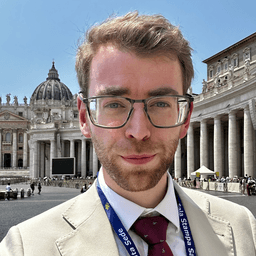
Michael Haynes is a self-employed English journalist and part of the Holy See Press Corps. You can follow him on X at @MLJHaynes, or at his website Per Mariam.
.png)