

Cardinal Raymond Burke has urged Catholics to be prepared for martyrdom in defence of marriage and the family.
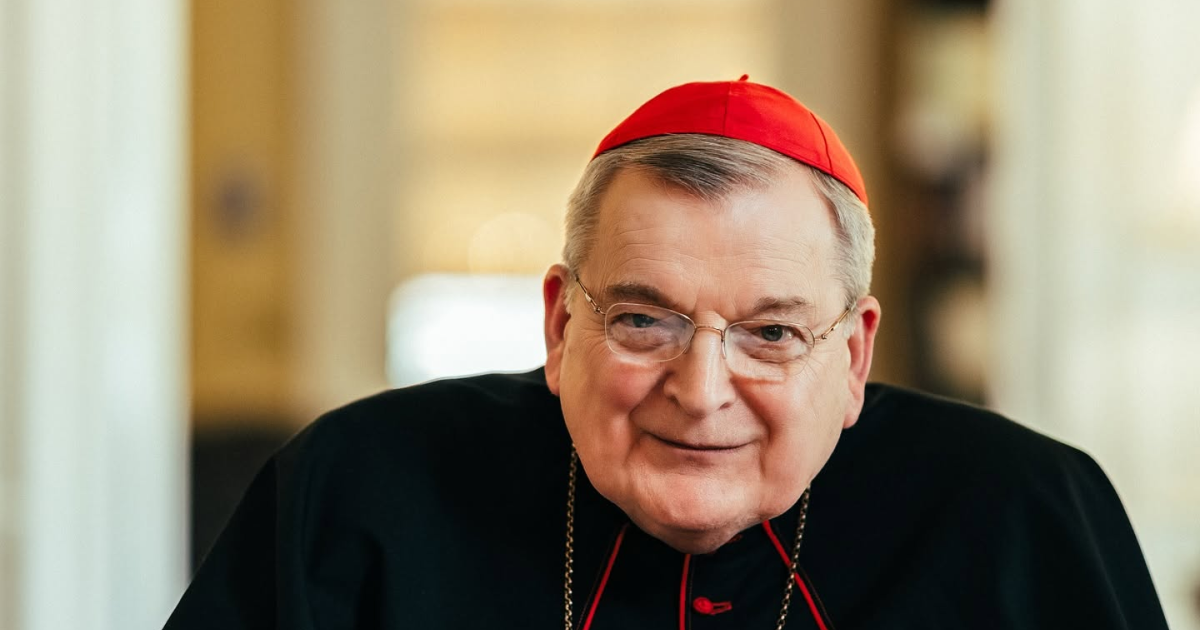
Delivering a recent homily, Cdl. Burke urged a renewed defence of marriage and the family, joining Cardinal Joseph Zen in highlighting a renewed need for the Church to prioritise the integrity of the sacrament.
Preaching at his Wisconsin shrine of Our Lady of Guadalupe for the feast of St James, Burke urged an imitation of St. James’ zeal to motivate Catholics:
“Inspired by the example of Saint James the Greater and aided by his intercession, let us resolve to take up with new enthusiasm and new energy the spiritual practices by which our hearts dwell fully and securely in the Heart of Jesus for the transformation of the world by means of the Sacrament of Holy Matrimony and its incomparable fruit, the family.”
Continuing, the American cardinal urged Catholics to defend the integrity of the sacrament and of the fullness of family life with their lives if necessary: “Let us be ready for martyrdom, if not the red martyrdom of blood, certainly the white martyrdom of faithful witness to Our Lord in the face of indifference, ridicule, and persecution.”
Burke’s appeal for a stronger defence of marriage and the family comes in the wake of the widespread influence of anti-life policies throughout much of formerly Christian civilisation, as abortion, divorce, LGBT ideology, and same-sex ‘marriage’ have become commonplace.
He was joined in making such an appeal just a few days later by Cardinal Zen, who wrote that the protection of the family must become a “primary mission” in pastoral activity these days.
“If we deny the preciousness of life and the family, what beauty remains in life?,” he questioned. “Have we abandoned the spring only to seek water in a leaking cistern?! It is said that even the devil once admitted: once the family is destroyed, victory is his.”
“Let us all make the sacred protection of the family our primary mission, the very focus of our pastoral work,” the cardinal appealed.
The double-pronged appeal of the two cardinals comes a few weeks ahead of a high-profile meeting being held at the Vatican in October on Amoris Laetitia, as Leo XIV has convened presidents of the national bishops’ conferences for the event marking 10 years of Pope Francis’ controversial text.
Running from October 7 to 14, the gathering is not a synod but simply an advisory or “consultative meeting”, according to the Vatican. Announcing it back in March, Leo commented that it would examine how best to “proclaim the Gospel to families today, in light of Amoris Laetitia” and determine the reality in local churches.
“Our era”, announced Leo, “is marked by rapid changes which make it necessary, even more than ten years ago, to give particular pastoral attention to families, to whom the Lord entrusts the task of participating in the Church’s mission of proclaiming and witnessing to the Gospel.”
No mention was made at the time about the controversy that has swirled around the text ever since its 2016 publication, namely the question of admitting divorced and ‘re-married’ people to Holy Communion. Pope Francis declared that there was “no other interpretation” of Amoris Laetitia except that given by the bishops of Buenos Aires, which admitted the divorced and ‘re-married’ to Holy Communion. In a June 2017 rescript this was then declared to be part of the Church’s magisterium.
But the text sparked instant and long-lasting debate in the Church, including the notable intervention by four cardinals who sent a dubia to Francis about the text. Burke and the 97-year-old Cardinal Walter Brandmüller are the only two signatories left alive.
Brandmüller had previously warned in 2015 that the interpretation of Amoris Laetitia which Francis later approved would be heretical, and numerous scholars and theologians echoed his concerns in the many appeals that were sent to Rome.
The four cardinals’ dubia remained unanswered, but a separate dubia issued in 2023 by Cardinal Dominik Duka O.P did prompt an answer. Asking whether Francis’ answer to the Buenos Aires bishops could be deemed “a statement of the ordinary Magisterium of the Church,” Duka was told that since Francis’ words were published in the Vatican’s official compilation of documents, the Acta Apostolicae Sedes, they were “authentic Magisterium”.
The debate surrounding Amoris Laetitia and the “dangers to the faith” which scholars warned it presented – as they wrote in a letter to the dean of the College of Cardinals – has somewhat faded away, but the concerns already registered by prelates and theologians have not.
Burke’s appeal to defend marriage even with the price of martyrdom echoes that which he made in the immediate aftermath of Amoris Laetitia’s publication in 2016, as he drew on the writings of Servant of God Father Hardon. “Observing the great confusion and error, also within the Church, in the present time, Father John Hardon frequently reminded all of the faithful that they must prepare themselves to suffer greatly, even to undergo martyrdom, in order to be faithful to the teaching of Christ in His Church,” Burke commented during a speech in May 2016.
For a large cohort of theologians, October’s meeting will be more significant than many have realised.
Michael Haynes is an English journalist in the Holy See Press Corps. He serves as Vatican Correspondent for the Catholic Herald, while readers can follow him at Per Mariam and on X @MLJHaynes.