July 17, 2026

Cardinal Sarah: Gender ideology and radical Islam are ‘apocalyptic beasts’

Michael Haynes
More
Related
Min read
share

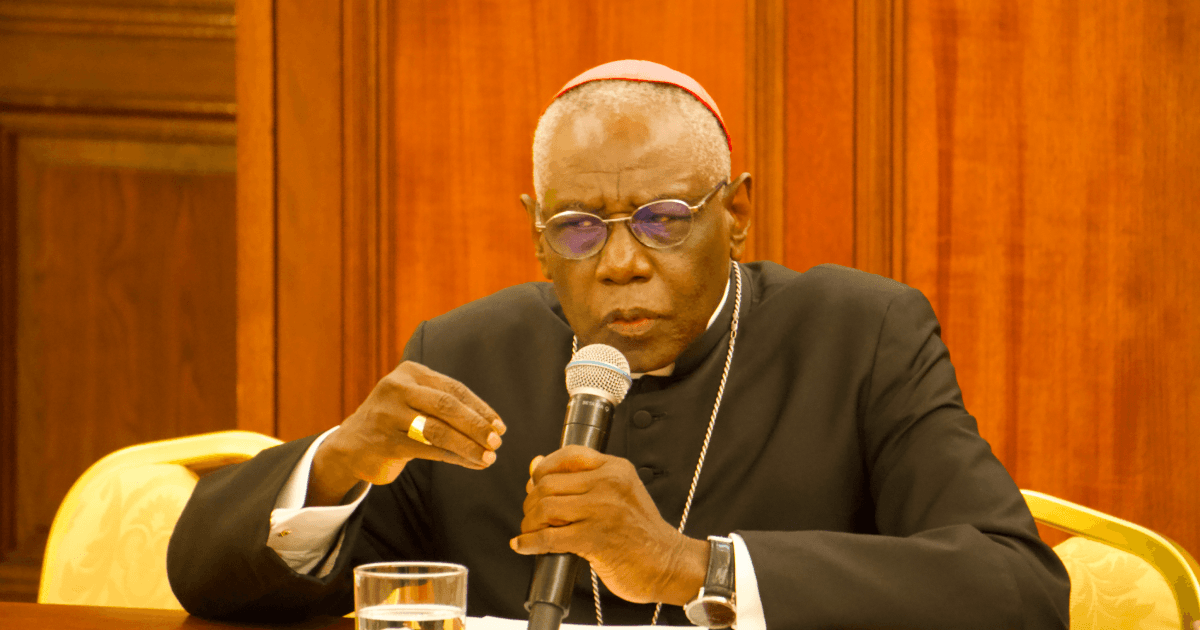
The rise of radical Islam and the relentless spread of gender ideology are two unlikely allies in the attack upon the sanctity of life and God, according to one prominent Vatican cardinal. Both “gender ideology and Islamic fundamentalism” are “apocalyptic beasts” which seek to destroy the family, humanity and the image of God, Cardinal Robert Sarah said this week at the European Parliament.  

“The crisis of the Church in the West and the crisis of the West itself are, at heart, one and the same crisis,” attested the cardinal during an address he gave at the European Parliament on Wednesday afternoon. “It is because the Church in many European nations has lost its identity, its prophetic voice, that the West itself has lost the meaning of its own civilisation.”
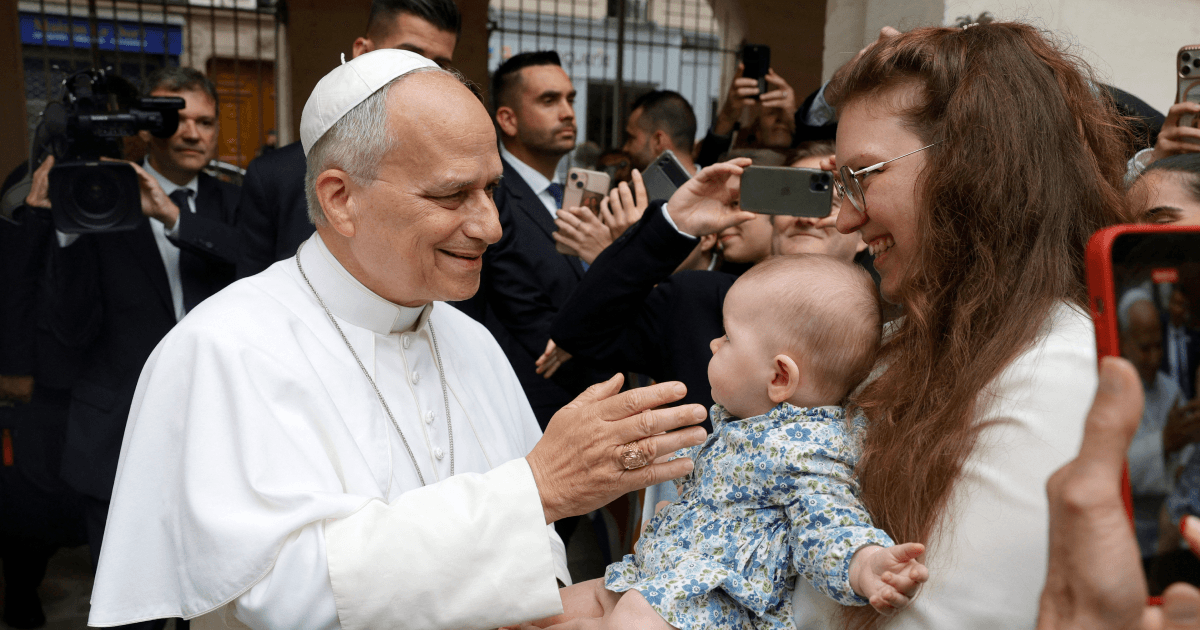
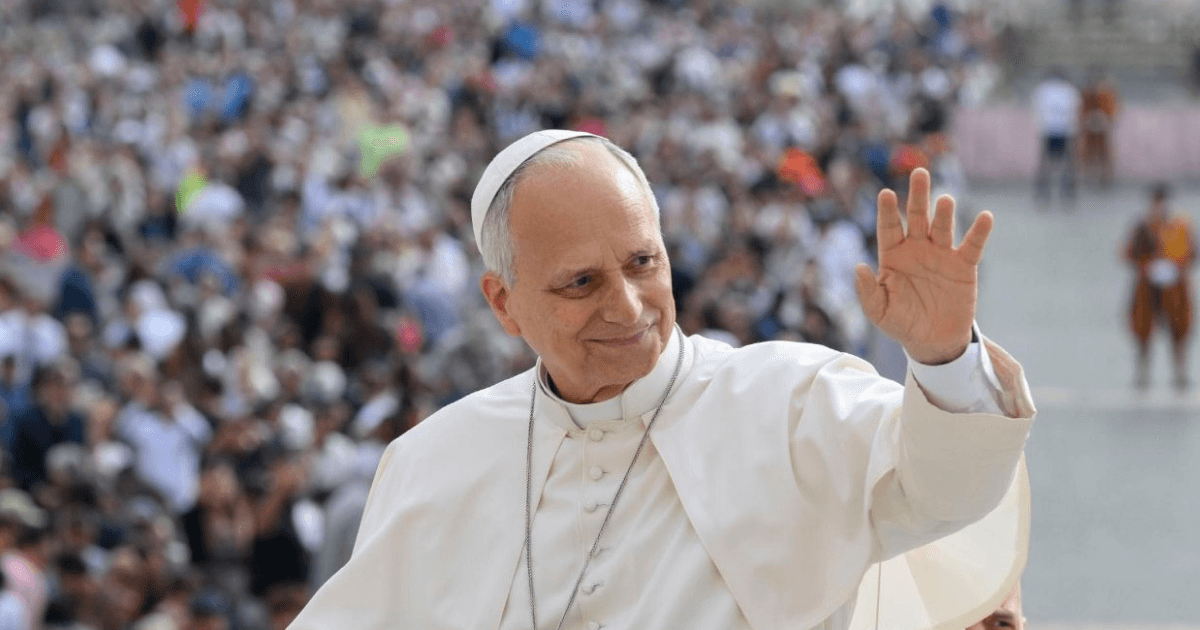
Sarah’s lengthy discourse took aim at what he identified as the key issues undermining civilisation, both in Europe and in Africa. Ultimately, he warned, Western states have hijacked language in a bid to overturn biological reality, the sanctity of life, and by extension religious freedom and belief.  

“In relations between the European Union and Africa, words are today used not to reveal reality, but to conceal it or even to overturn it,” stated Sarah, a native of Guinea, who served as prefect of the Congregation for Divine Worship from 2014 to 2021.

The cardinal outlined examples of this twisting of language, listing terms which veteran pro-life activists have long raised concerns about:

“We speak of ‘sexual and reproductive health’ and, in many cases, what is meant is access to abortion. We speak of ‘gender equality’ and what is meant, at times, is the deconstruction of the sexual difference between man and woman inherent in the human body.”

He drew from both Benedict XVI, Francis, and Leo XIV, highlighting how each pontiff raised the alarm about the imposition of anti-life ideologies in the name of Western civilisation. “There is talk of ‘human rights’ for African countries, and what is meant is the imposition of legal categories alien to our history, our faith, our culture and our anthropological vision,” he said.  

Ultimately, in Sarah’s assessment, this reaches its “most dramatic point” with the question of abortion. Referencing the Charter of Fundamental Rights of the European Union, the cardinal condemns how “the lack of access to abortion is defined as ‘violence’, whilst the unborn child – the weakest, the most innocent among us – is deprived of any voice, any representation, any right.”

The cardinal did not leave abortion and gender ideology as separate elements, but linked them as part of a wider threat to the family, and thus to the future of society. Continuing further, he outlined that the underlying logic behind such ideologies is ultimately a rejection of God and the order of creation. “They are the political and legal application of that very same denial of given nature, of that very same rejection of the Creator,” he stated.

In Sarah’s analysis, the promotion of such ideologies, particularly through the twisting of language, has a direct effect upon religious belief. By describing abortion as a “right”, especially when aid to developing countries is conditioned upon this, society thus forces people to “conform to a view of the human person that is incompatible with their religious convictions”.

“This”, he decried, “is not neutrality: it is imposition and unacceptable oppression”.

Over the course of many years, family activists have long decried the linking of abortion or contraceptive access to necessary aid for third world countries. Any suggestion of this has often been rejected as mere conspiracy, but Cdl. Sarah attested himself to be well versed in examples of such demands. He recalled how a United Nations Secretary-General demanded the decriminalisation of homosexuality in one African nation, as prerequisite for aid.

“I have repeatedly denounced – and I repeat this today in this forum – the desire of certain powers to impose false values through political and financial means: in some African countries, entire ministries dedicated to gender theory have been set up in exchange for economic support.”

Instead, he urged politicians to recognise that religion is not an “obstacle to development, as is sometimes insinuated in the corridors of Brussels, but a fundamental requirement of justice.”

Sarah’s message was not devoid of import: just before his speech he had been welcomed by Antonella Sberna, Vice-President of the European Parliament, there to represent the Brussels political establishment.  

Addressing the West as a whole and politicians in particular, Sarah urged a return to the alignment of language with reality, so that nations might once again speak “in accordance with the truth of the person, of the family, and of peoples, including, and above all, in the context of cooperation between the European Union and Africa.”

Words such as “‘man’, ‘woman’, ‘marriage’ and ‘family’ should not be reduced to social constructs that can be manipulated at will to suit the ideological fashions of the moment”, he warned, “but should be safeguarded as ontological realities—realities created and not self-produced by humankind—and, for those who are believers, as realities of biblical revelation.”

Without this necessary change, Sarah warned that society would be fundamentally altered at every level, given that the nature of reality was under attack through the perversion of biological reality.  

Gender ideology and the anti-life lobby is no less dangerous than “Islamic fundamentalism”, he warned. The two, though differing in their “origin and form”, both “share the claim to rewrite humanity in their own image – one in the name of so-called progress, the other in the name of a so-called return to an original purity – denying in every case that religious freedom and that dignity of the person.”

The strength of Sarah’s intervention is a rare instance of such a speech being delivered in the heart of Brussels but it is not out of character for the Guinean prelate. In recent years especially he has become increasingly vocal against the rise of modern ideologies seeking to undermine the Church or the family.  

Though keeping a relatively low media profile, Sarah’s appearances to deliver such speeches have been carefully orchestrated both to rally opposition to the ideologies he wishes to oppose and to condemn them in the areas where they are most promoted.  

Michael Haynes is an English journalist in the Holy See Press Corps. He serves as Vatican Correspondent for the Catholic Herald, while readers can follow him at Per Mariam and on X @MLJHaynes.

Continue reading with a free account

Create a free account to read up to five articles each month
Create free account

You have # free articles remaining this month.

Subscribe to get unlimited access.
Sign up

subscribe to the catholic herald today

Our best content is exclusively available to our subscribers. Subscribe today and gain instant access to expert analysis, in-depth articles, and thought-provoking insights—anytime, anywhere. Don’t miss out on the conversations that matter most.
Subscribe