January 11, 2026
January 11, 2026

Inside the consistory: how cardinals viewed Leo XIV’s first gathering

Min read
share

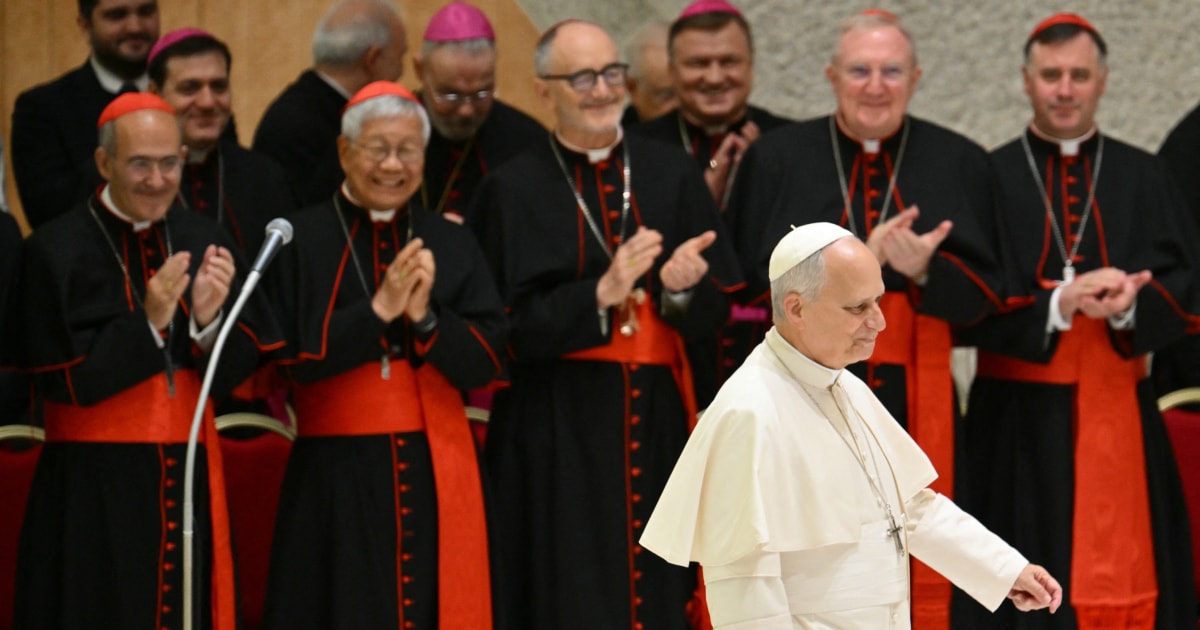
In the wake of Pope Leo XIV’s inaugural extraordinary consistory on 7 to 8 January 2026, this exclusive feature presents a series of candid, unfiltered reflections from the Church’s highest prelates. Over the past week, The Catholic Herald engaged in in-depth conversations with several members of the College of Cardinals, some speaking on the record and others preferring anonymity, to reveal their genuine thoughts, insights, and behind-the-scenes perspectives on the proceedings. These voices offer a rare glimpse into what transpired and what may yet unfold in this evolving era of the pontificate of Pope Leo XIV.

What was staggering at a glance was the number of notable absences from this extraordinary gathering. Of the College of Cardinals’ approximately 245 members, only around 170 participated, roughly 70 per cent, despite the Pope’s clear summons for broad consultation in the governance of the universal Church. This shortfall included several prominent figures from across the ecclesial spectrum.

Among those absent was the influential liberal voice of Cardinal Christoph Schönborn, Archbishop Emeritus of Vienna, and the conservative Cardinal Willem Eijk, Archbishop of Utrecht. Distance and age also played evident roles in other absences, including cardinals from far flung regions such as Cardinal Ignatius Suharyo Hardjoatmodjo of Indonesia, as well as Rome resident figures such as Cardinal Francis Arinze.

On the press side, as cardinals began arriving for the opening of Pope Leo XIV’s first extraordinary consistory on 7 January, they slowly filtered into the Paul VI Hall. Cardinal Stephen Chow Sau-yan of Hong Kong was the first to register and, speaking to The Catholic Herald, the Chinese Jesuit prelate expressed his delight at being present. “I’m feeling good for the consistory,” he said, adding that it was “good to see His Holiness again”.

Later, Cardinal Pierbattista Pizzaballa, the Latin Patriarch of Jerusalem, arrived from the Augustinianum and spoke with The Catholic Herald about the agenda. He remarked that he thought “the actual topics are modest enough for one day and a half”, referring to the original four focused discussion options.

The proposed theme of liturgy generated considerable interest among the cardinals, and a notable consensus began to emerge within the College, including among non-conservative members, expressing growing concern over liturgical abuses in various forms.

Cardinal Pizzaballa told The Catholic Herald: “These are typical problems of Western countries. We in general [the Church in the East] are so used to different rites that we don’t see any problem [with the TLM].” While his perspective on the Traditional Latin Mass may have unsettled some conservative readers, when the topic of synodality arose he added: “Reform is not a Church language.”

His Eminence went on to explain: “In the Church there are no reforms. In the Church we have to think about what our mission is, what our vocation is, according to the times, but faithful to the roots and to the mission of the Church.”

As Cardinal Pizzaballa made his way into the Paul VI Hall, Cardinal Frank Leo, Metropolitan Archbishop of Toronto, paused to speak with The Catholic Herald. On the anticipated themes of the consistory, he said: “Well, you know, those are the general themes that we read about, that we sort of prepared for, but I hope that the transmission of the faith, of the Catholic faith, and evangelisation and renewal of the faith in the lives of our communities would be front and centre.”

Regarding the Traditional Latin Mass and whether it might appear on the agenda, Cardinal Leo replied: “You know, we don’t have all the details of what we will be discussing, so maybe it will be on the agenda as a subcategory.”

When asked whether the College of Cardinals was divided, he answered firmly: “I don’t think it is divided at all. I think Christ is always our focal point, the centre of our life and our everything.”

As cardinals continued to arrive at the Paul VI Hall on the morning of 7 January, The Catholic Herald gathered a series of candid, off-the-cuff remarks that captured the sense of anticipation and uncertainty surrounding Pope Leo XIV’s inaugural extraordinary consistory.

One French cardinal observed: “We still don’t know what we will really be discussing, but in itself it is very interesting for the Pope to call this first consistory.”

An African cardinal, asked about the agenda and the possibility of discussion on liturgical reform, replied cautiously: “That’s the question we’re going to ask. Yes, yes, but I don’t know if we will get there yet.”

An Italian cardinal struck a similar note, saying: “These four points are just indications, but we are not going to stay only on those four points. Let us see what will happen, because the speech of the Holy Father at the beginning is also important, as it gives direction and helps shape the culture.”

Several private conversations with The Catholic Herald during the extraordinary consistory revealed a shared hope among the cardinals for greater unity under Pope Leo XIV, particularly on the question of liturgy. Cardinal Giuseppe Versaldi, former Prefect of the Congregation for Catholic Education, remarked: “I think this Pope tries to create more unity in the Church, also about the liturgy. What is important is to recognise the differences among cultures, but also to keep firm the unique meaning of the liturgy, with the cult of God and the expression of the mystery of the faith.”

Meanwhile, Cardinal Anders Arborelius of Stockholm offered a more tentative, hopeful perspective on the liturgy, saying: “Well, I hope we can find a compromise, and I cannot tell how the Holy Father has planned for me. But we hope that there will be a kind of.”

With registration closing at 3.30 pm and the first day of deliberations concluding around 7.00 pm on 7 January, The Catholic Herald learned that Pope Leo XIV had imposed a strict restriction on the cardinals that they were not to speak to the press about the proceedings while the consistory was in session. This directive was confirmed by two Iberian cardinals as they departed through the Perugino entrance of Domus Santa Marta later that evening. Speaking briefly to The Catholic Herald, they explained that the Pope had explicitly asked the College not to comment on the workings of the first day, a measure intended to preserve an appropriate atmosphere.

Nevertheless, in the hours and days following the close of the day and a half gathering, The Catholic Herald succeeded in speaking exclusively and privately with numerous cardinals, both by telephone and in person. These post-consistory conversations allowed for unfiltered, candid reflections on the consistory.

From the start of the extraordinary consistory, concerns were voiced about the new arrangement, with some cardinals privately questioning both its purpose and coherence. A conservative cardinal told The Catholic Herald that the new structure of the consistory was not working, saying: “This whole synodal style just doesn’t make any sense to me. I don’t understand the intelligent men who write on and on about it. We heard a lot of that.”

Cardinal Müller supported this position, telling The Catholic Herald: “The new system is not normative. This is a method of the synods, and I think it’s helping the Pope not as Bishop of Rome but as a diocesan bishop.”

A progressive cardinal also told The Catholic Herald that what they had decided was in line with the style Pope Francis had begun to introduce into the synod, namely that instead of sitting in a hall, as normally happens in the new audience hall of St Paul VI, a different arrangement was used. The progressive cardinal said his main support for the change in format was that it gave a physical sign of collegiality: “Where the Pope and the leaders are sitting at the front, and everyone else is looking down at them. This new arrangement of sitting within the huge audience hall and sitting around tables was a very bright sign of genius, I would say, because it makes it so much easier for people to speak around the table and for everyone to speak at the same level.”

Another issue the cardinal raised was a structural concern about the size and composition of the College itself: “It’s a big problem in the College of Cardinals, and that’s part of the reason we don’t know one another. Pope Francis swelled the College to 133 voters, and then you have all those over 80. It’s a big group.”

During the first day’s group conversations, the topic of yearly consistories became a focal point. One conservative cardinal told The Catholic Herald that “one cardinal suggested that they do it by Zoom or something to save money”.

The composition of the groups was also a concern. A conservative cardinal put it to The Catholic Herald: “It was very controlled. One of the cardinals referred to it as high school.” His Eminence further said: “It’s the same programme as Pope Francis, but with a generous leader.”

A cardinal told The Catholic Herald: “We didn’t know how it was going to be organised until two days before, and it was sent by email. The cardinals at my table, a number of them never got it, and some of the older men don’t do email regularly.” He added: “There was a lot of confusion. So you looked at the composition of the tables, and it seemed to me that things were kind of set up.”

Another cardinal joked: “Walking together and listening. But the idea is that if you don’t agree with the group, you haven’t listened enough.”

As the second day of the extraordinary consistory began on 8 January 2026, following the concelebrated Mass at the Altar of the Chair in St Peter’s Basilica, the second and third sessions focused on continued small group work, followed by presentations of the group reports to the full assembly.

During the presentation of the group work, a number of cardinals in conversation with The Catholic Herald said that the group discussions and the three minutes of “open intervention” amounted to a plebiscite of sorts on Pope Francis’s legacy. As one cardinal told The Catholic Herald: “Some of his friends [Pope Francis] spoke about a new Church and absolute change.”

Another cardinal went further, saying: “His cult of personality should have nothing to do with the Catholic Church.”

This inevitably led to disagreement, with divisions becoming more apparent when questions of synodality were raised. In conversations with a senior African cardinal, he said that while he supported the idea of synodality in principle, it required clear guardrails and careful definition. He explained: “What I picked up was that there’s uncertainty about what you call a synod in the canonical sense, where it’s a group of bishops sitting to advise the Pope on whatever topic he has chosen.

“Then there’s the extension of that notion, which Pope Francis brought in by including laypeople, religious, and priests in the synod process. They are full members in the sense that they can vote on propositions and so on. That’s a different level, I think, from what is traditionally understood as synod.”

The cardinal went on to place the debate within a wider process of development rather than settled practice. “I would also say that the whole idea of a synod on synodality is something that’s fluid. It’s still in development. It hasn’t come to a clear form yet as to how far it’s going to go. In the background all the time when we’re talking about synodality is the German synod, the Synodal Way, which is causing problems.”

He concluded by warning of the risks if the process remained undefined. “It could become a pressure group of laypeople, priests, maybe even bishops and cardinals, as was suggested in the consistory. I don’t know, but it could become a pressure group trying to push a particular line of direction.”

A further point of contention arose towards the end of the proceedings over the handling of the free interventions. A European former curial cardinal told The Catholic Herald that there was a growing sense of frustration among participants. “We spoke for three hours, no? But in the end, nobody took our opinion.”

Similar concerns were voiced by another conservative cardinal, who criticised both the format and the substance of the exercise. He told The Catholic Herald that “there was time for the free interventions, but they were very, very short”, adding that the concept itself was misleading. “I think the so-called free interventions were not free and were in fact enforced interventions,” he said. “It must be the intervention of everybody that is the basis.”

Significantly, one cardinal told The Catholic Herald that although the subject of the Traditional Latin Mass was not raised openly on the floor, it nevertheless entered the proceedings in written form. “While the liturgy was put aside,” the cardinal said, “we were given a paper at the end written by Cardinal Arthur Roche, which was pretty negative concerning the TLM.”

Taken together, this development points to a downward trajectory in the Holy See’s present approach to the traditional Latin Mass. The fact that a critical assessment was introduced in written form, rather than tested through frank exchange on the floor, will be read by many as a sign that the direction of travel is already being set. It is for this reason that the follow-up consistory scheduled for June assumes particular importance.

In a final reflection offered to The Catholic Herald at the close of the consistory, Cardinal Müller sought to dispel what he described as a false dichotomy in the Church’s internal debates. “The Church of Benedict doesn’t exist anymore,” he said, offering a sober assessment of the road ahead.

Looking ahead to the next consistory, scheduled for 27 to 28 June, several cardinals suggested that the focus was likely to return to the two areas that had failed to gain traction during the recent sessions. In private conversations, they said the prevailing expectation was that discussions would centre on liturgy and curial reform, subjects many believed had been set aside rather than resolved.

In the wake of Pope Leo XIV’s inaugural extraordinary consistory on 7 to 8 January 2026, this exclusive feature presents a series of candid, unfiltered reflections from the Church’s highest prelates. Over the past week, The Catholic Herald engaged in in-depth conversations with several members of the College of Cardinals, some speaking on the record and others preferring anonymity, to reveal their genuine thoughts, insights, and behind-the-scenes perspectives on the proceedings. These voices offer a rare glimpse into what transpired and what may yet unfold in this evolving era of the pontificate of Pope Leo XIV.

What was staggering at a glance was the number of notable absences from this extraordinary gathering. Of the College of Cardinals’ approximately 245 members, only around 170 participated, roughly 70 per cent, despite the Pope’s clear summons for broad consultation in the governance of the universal Church. This shortfall included several prominent figures from across the ecclesial spectrum.

Among those absent was the influential liberal voice of Cardinal Christoph Schönborn, Archbishop Emeritus of Vienna, and the conservative Cardinal Willem Eijk, Archbishop of Utrecht. Distance and age also played evident roles in other absences, including cardinals from far flung regions such as Cardinal Ignatius Suharyo Hardjoatmodjo of Indonesia, as well as Rome resident figures such as Cardinal Francis Arinze.

On the press side, as cardinals began arriving for the opening of Pope Leo XIV’s first extraordinary consistory on 7 January, they slowly filtered into the Paul VI Hall. Cardinal Stephen Chow Sau-yan of Hong Kong was the first to register and, speaking to The Catholic Herald, the Chinese Jesuit prelate expressed his delight at being present. “I’m feeling good for the consistory,” he said, adding that it was “good to see His Holiness again”.

Later, Cardinal Pierbattista Pizzaballa, the Latin Patriarch of Jerusalem, arrived from the Augustinianum and spoke with The Catholic Herald about the agenda. He remarked that he thought “the actual topics are modest enough for one day and a half”, referring to the original four focused discussion options.

The proposed theme of liturgy generated considerable interest among the cardinals, and a notable consensus began to emerge within the College, including among non-conservative members, expressing growing concern over liturgical abuses in various forms.

Cardinal Pizzaballa told The Catholic Herald: “These are typical problems of Western countries. We in general [the Church in the East] are so used to different rites that we don’t see any problem [with the TLM].” While his perspective on the Traditional Latin Mass may have unsettled some conservative readers, when the topic of synodality arose he added: “Reform is not a Church language.”

His Eminence went on to explain: “In the Church there are no reforms. In the Church we have to think about what our mission is, what our vocation is, according to the times, but faithful to the roots and to the mission of the Church.”

As Cardinal Pizzaballa made his way into the Paul VI Hall, Cardinal Frank Leo, Metropolitan Archbishop of Toronto, paused to speak with The Catholic Herald. On the anticipated themes of the consistory, he said: “Well, you know, those are the general themes that we read about, that we sort of prepared for, but I hope that the transmission of the faith, of the Catholic faith, and evangelisation and renewal of the faith in the lives of our communities would be front and centre.”

Regarding the Traditional Latin Mass and whether it might appear on the agenda, Cardinal Leo replied: “You know, we don’t have all the details of what we will be discussing, so maybe it will be on the agenda as a subcategory.”

When asked whether the College of Cardinals was divided, he answered firmly: “I don’t think it is divided at all. I think Christ is always our focal point, the centre of our life and our everything.”

As cardinals continued to arrive at the Paul VI Hall on the morning of 7 January, The Catholic Herald gathered a series of candid, off-the-cuff remarks that captured the sense of anticipation and uncertainty surrounding Pope Leo XIV’s inaugural extraordinary consistory.

One French cardinal observed: “We still don’t know what we will really be discussing, but in itself it is very interesting for the Pope to call this first consistory.”

An African cardinal, asked about the agenda and the possibility of discussion on liturgical reform, replied cautiously: “That’s the question we’re going to ask. Yes, yes, but I don’t know if we will get there yet.”

An Italian cardinal struck a similar note, saying: “These four points are just indications, but we are not going to stay only on those four points. Let us see what will happen, because the speech of the Holy Father at the beginning is also important, as it gives direction and helps shape the culture.”

Several private conversations with The Catholic Herald during the extraordinary consistory revealed a shared hope among the cardinals for greater unity under Pope Leo XIV, particularly on the question of liturgy. Cardinal Giuseppe Versaldi, former Prefect of the Congregation for Catholic Education, remarked: “I think this Pope tries to create more unity in the Church, also about the liturgy. What is important is to recognise the differences among cultures, but also to keep firm the unique meaning of the liturgy, with the cult of God and the expression of the mystery of the faith.”

Meanwhile, Cardinal Anders Arborelius of Stockholm offered a more tentative, hopeful perspective on the liturgy, saying: “Well, I hope we can find a compromise, and I cannot tell how the Holy Father has planned for me. But we hope that there will be a kind of.”

With registration closing at 3.30 pm and the first day of deliberations concluding around 7.00 pm on 7 January, The Catholic Herald learned that Pope Leo XIV had imposed a strict restriction on the cardinals that they were not to speak to the press about the proceedings while the consistory was in session. This directive was confirmed by two Iberian cardinals as they departed through the Perugino entrance of Domus Santa Marta later that evening. Speaking briefly to The Catholic Herald, they explained that the Pope had explicitly asked the College not to comment on the workings of the first day, a measure intended to preserve an appropriate atmosphere.

Nevertheless, in the hours and days following the close of the day and a half gathering, The Catholic Herald succeeded in speaking exclusively and privately with numerous cardinals, both by telephone and in person. These post-consistory conversations allowed for unfiltered, candid reflections on the consistory.

From the start of the extraordinary consistory, concerns were voiced about the new arrangement, with some cardinals privately questioning both its purpose and coherence. A conservative cardinal told The Catholic Herald that the new structure of the consistory was not working, saying: “This whole synodal style just doesn’t make any sense to me. I don’t understand the intelligent men who write on and on about it. We heard a lot of that.”

Cardinal Müller supported this position, telling The Catholic Herald: “The new system is not normative. This is a method of the synods, and I think it’s helping the Pope not as Bishop of Rome but as a diocesan bishop.”

A progressive cardinal also told The Catholic Herald that what they had decided was in line with the style Pope Francis had begun to introduce into the synod, namely that instead of sitting in a hall, as normally happens in the new audience hall of St Paul VI, a different arrangement was used. The progressive cardinal said his main support for the change in format was that it gave a physical sign of collegiality: “Where the Pope and the leaders are sitting at the front, and everyone else is looking down at them. This new arrangement of sitting within the huge audience hall and sitting around tables was a very bright sign of genius, I would say, because it makes it so much easier for people to speak around the table and for everyone to speak at the same level.”

Another issue the cardinal raised was a structural concern about the size and composition of the College itself: “It’s a big problem in the College of Cardinals, and that’s part of the reason we don’t know one another. Pope Francis swelled the College to 133 voters, and then you have all those over 80. It’s a big group.”

During the first day’s group conversations, the topic of yearly consistories became a focal point. One conservative cardinal told The Catholic Herald that “one cardinal suggested that they do it by Zoom or something to save money”.

The composition of the groups was also a concern. A conservative cardinal put it to The Catholic Herald: “It was very controlled. One of the cardinals referred to it as high school.” His Eminence further said: “It’s the same programme as Pope Francis, but with a generous leader.”

A cardinal told The Catholic Herald: “We didn’t know how it was going to be organised until two days before, and it was sent by email. The cardinals at my table, a number of them never got it, and some of the older men don’t do email regularly.” He added: “There was a lot of confusion. So you looked at the composition of the tables, and it seemed to me that things were kind of set up.”

Another cardinal joked: “Walking together and listening. But the idea is that if you don’t agree with the group, you haven’t listened enough.”

As the second day of the extraordinary consistory began on 8 January 2026, following the concelebrated Mass at the Altar of the Chair in St Peter’s Basilica, the second and third sessions focused on continued small group work, followed by presentations of the group reports to the full assembly.

During the presentation of the group work, a number of cardinals in conversation with The Catholic Herald said that the group discussions and the three minutes of “open intervention” amounted to a plebiscite of sorts on Pope Francis’s legacy. As one cardinal told The Catholic Herald: “Some of his friends [Pope Francis] spoke about a new Church and absolute change.”

Another cardinal went further, saying: “His cult of personality should have nothing to do with the Catholic Church.”

This inevitably led to disagreement, with divisions becoming more apparent when questions of synodality were raised. In conversations with a senior African cardinal, he said that while he supported the idea of synodality in principle, it required clear guardrails and careful definition. He explained: “What I picked up was that there’s uncertainty about what you call a synod in the canonical sense, where it’s a group of bishops sitting to advise the Pope on whatever topic he has chosen.

“Then there’s the extension of that notion, which Pope Francis brought in by including laypeople, religious, and priests in the synod process. They are full members in the sense that they can vote on propositions and so on. That’s a different level, I think, from what is traditionally understood as synod.”

The cardinal went on to place the debate within a wider process of development rather than settled practice. “I would also say that the whole idea of a synod on synodality is something that’s fluid. It’s still in development. It hasn’t come to a clear form yet as to how far it’s going to go. In the background all the time when we’re talking about synodality is the German synod, the Synodal Way, which is causing problems.”

He concluded by warning of the risks if the process remained undefined. “It could become a pressure group of laypeople, priests, maybe even bishops and cardinals, as was suggested in the consistory. I don’t know, but it could become a pressure group trying to push a particular line of direction.”

A further point of contention arose towards the end of the proceedings over the handling of the free interventions. A European former curial cardinal told The Catholic Herald that there was a growing sense of frustration among participants. “We spoke for three hours, no? But in the end, nobody took our opinion.”

Similar concerns were voiced by another conservative cardinal, who criticised both the format and the substance of the exercise. He told The Catholic Herald that “there was time for the free interventions, but they were very, very short”, adding that the concept itself was misleading. “I think the so-called free interventions were not free and were in fact enforced interventions,” he said. “It must be the intervention of everybody that is the basis.”

Significantly, one cardinal told The Catholic Herald that although the subject of the Traditional Latin Mass was not raised openly on the floor, it nevertheless entered the proceedings in written form. “While the liturgy was put aside,” the cardinal said, “we were given a paper at the end written by Cardinal Arthur Roche, which was pretty negative concerning the TLM.”

Taken together, this development points to a downward trajectory in the Holy See’s present approach to the traditional Latin Mass. The fact that a critical assessment was introduced in written form, rather than tested through frank exchange on the floor, will be read by many as a sign that the direction of travel is already being set. It is for this reason that the follow-up consistory scheduled for June assumes particular importance.

In a final reflection offered to The Catholic Herald at the close of the consistory, Cardinal Müller sought to dispel what he described as a false dichotomy in the Church’s internal debates. “The Church of Benedict doesn’t exist anymore,” he said, offering a sober assessment of the road ahead.

Looking ahead to the next consistory, scheduled for 27 to 28 June, several cardinals suggested that the focus was likely to return to the two areas that had failed to gain traction during the recent sessions. In private conversations, they said the prevailing expectation was that discussions would centre on liturgy and curial reform, subjects many believed had been set aside rather than resolved.

share

subscribe to the catholic herald today

Our best content is exclusively available to our subscribers. Subscribe today and gain instant access to expert analysis, in-depth articles, and thought-provoking insights—anytime, anywhere. Don’t miss out on the conversations that matter most.
Subscribe