

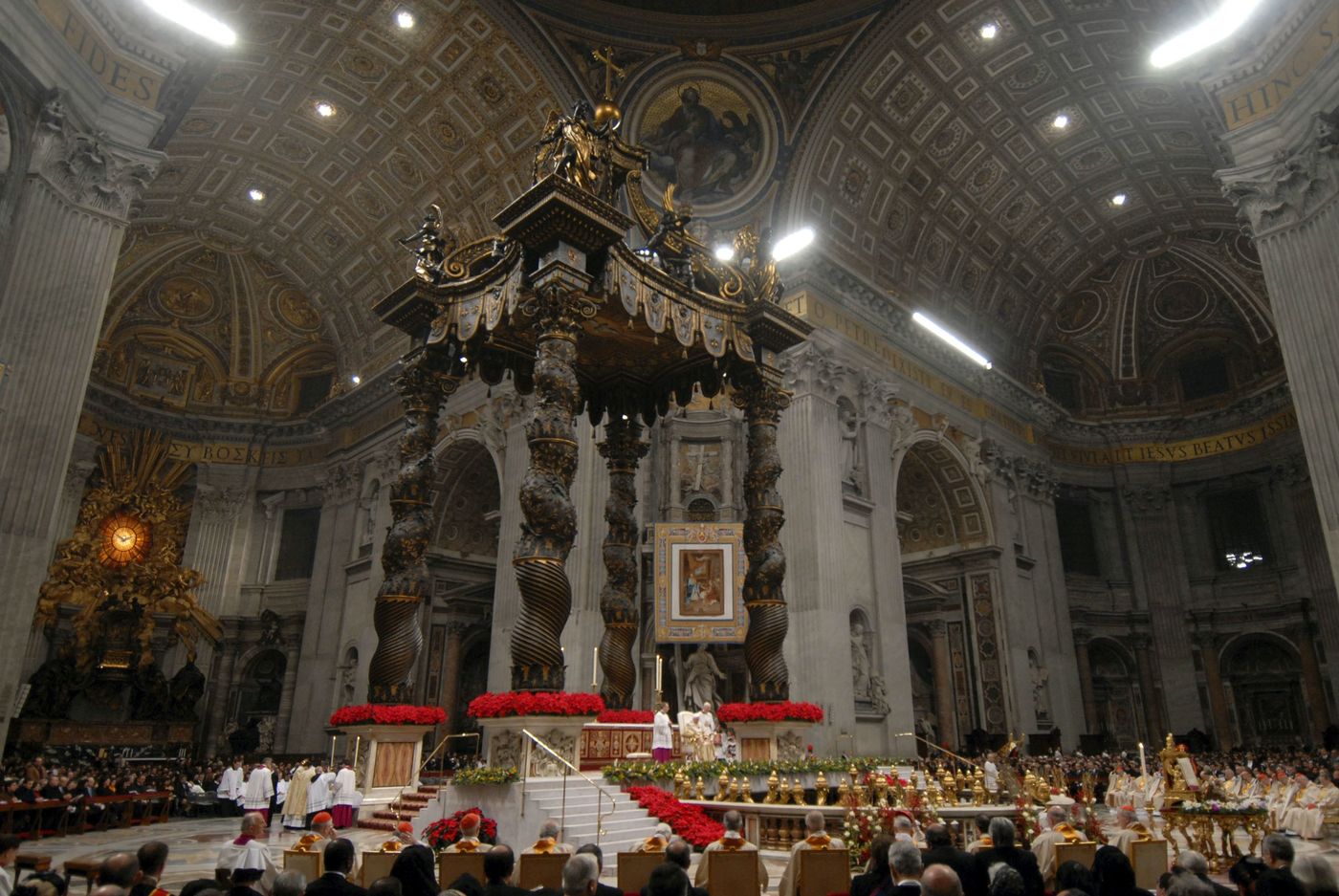
THE DRAFT FINAL REPORT: SOME FIRST OBSERVATIONS No one should envy the actual wordsmiths who had to do the heavy lifting, behind the scenes of the drafting commission, to produce a draft final report for Synod-2018, which was given to the Synod fathers yesterday morning. Not only did those drafters have to contend with the hundreds of proposals offered to the Synod in its general assemblies as well as in its discussion groups; an even greater challenge involved navigating the fault lines in the Catholic Church that Synod-2018 has made unmistakably clear. It’s worth noting some of those fault lines before offering some first observations on the draft final report itself. The first is the fault line between those who are determined to make the “See-Judge-Act” method pioneered by the Young Christian Workers movement almost ninety years ago the normative structure for Church documents – which puts a premium on sociological analysis as the entry-point for ecclesial reflection – and those who think that beginning with divine revelation, especially in the Bible, is the appropriate place to begin a Catholic reflection on anything and everything. There is the fault line between those determined to make Pope Francis’s apostolic exhortation Amoris Laetitia the single, controlling interpretive framework for all of Catholic moral life (which inevitably minimizes the normative character of John Paul II’s 1993 encyclical Veritatis Splendor), and those who believe the ambiguities in Amoris Laetitia must not become the occasion to deconstruct the classic norms of Catholic moral teaching and pastoral practice. Then there are the many fault lines caused by the vastly different pastoral experiences of the local Churches, some of which face active persecution or war and some of which confront the challenge of affluent decadence; how does a synodal document speak to all those experiences? And there is the fault line between those whose concept of a “listening Church” seems to preclude much of the Church’s classic teaching function, and those who believe that what young adults today are looking for is a Church that knows where it wishes to lead humanity and teaches clearly, always with compassion, but also with conviction. Given these fault lines, the draft final report is better than some expected, or even feared. There is an effective, even touching, use of the Emmaus story in Luke 24 as the biblical “frame” for the document. There is a strong section condemning sexual abuse by anyone; a frank acknowledgment of the irresponsibility of bishops in failing to discipline abusive priests; and a recognition of how great an obstacle clerical sexual abuse is to evangelization. The draft final report links baptism to mission in a way that reflects Pope Francis’s challenge, often forgotten amidst recent battles, that Catholicism should become a Church of radically converted disciples, permanently in mission. But there remain some problems that should be addressed in the days ahead, before the Really Final Draft Final Report is voted on, paragraph by paragraph, thereby producing the Final Final Report. The paragraphs on sexual abuse would be strengthened and made more credible to lay people if the abuse crisis were not blamed on “clericalism.” No one doubts that clericalism is a problem in the Church, not least in Latin America. But to turn it into an all-purpose explanation of clerical sexual abuse is to ignore the sexual dysfunction that is manifestly the primary cause of sexual abuse by anyone. There is unambiguous and overwhelming empirical evidence of the linkage between certain forms of sexual dysfunction and clerical sexual abuse, and that should be acknowledged. The report’s discussion on family would be much improved by a reflection on the vocation of fatherhood, which is typically ignored or minimized in western culture, with serious social effects. Motherhood is praised in the document, but Dad gets short shrift; that has to change. At several points the draft final report falls into Newspeak about “constructing” one’s identity, usages that seem to veer perilously close to the post-modern notion that every facet of one’s identity, including “sexual identity,” is a matter of assertion rather than reality. That is not what we know from revelation, and any ambiguities on this point require correction. Throughout the Synod, the German-language discussion group insisted that the Church’s teaching on sexuality and the ethics of human love ought to be more “elaborated,” anthropologically and theologically; the implication seemed to be that this had not been done over the centuries, most recently in the Theology of the Body. The language of “elaboration” appears at several points in the draft final report, and that language should be modified or even eliminated. Those changes might also be the occasion for a positive affirmation of chastity as the integrity of love, which is everyone’s vocation. No one doubts that the Church ought to teach its ethic of human love more persuasively and winsomely, But to suggest, as the Germans did and the draft final report does, that Catholicism hasn’t had much of interest or consequence (or pastoral effect) to say about all this before now is just nonsense – and a form of pandering to dominant western cultural shibboleths. “Discernment” is discussed at considerable length in the document, but almost always in affective terms. To reduce “discernment” to a matter of subjective sentiment and feeling leaves little room for a synodal affirmation of the life of the mind, for a synodal demand for catechetical excellence as an integral part of Christian formation, or for a synodal acknowledgment that theology can be a means of discernment. In both the Synod’s general assembly and in its discussion groups, there were numerous critiques of what bishops described as the anti-intellectualism of the Synod’s working document, but those concerns have not been adequately addressed in the draft final report. They should be; the notion that the pontificates of John Paul II and Benedict XVI were “too intellectual” should not inform an ecclesial document today, not least at a cultural moment in the West of massive intellectual confusion. The draft final report makes a clear and welcome statement that the Church does not categorize or identify people by their sexual appetites or desires. But it needs greater clarity on the normativity of marriage rightly understood, and while affirming the Church’s love for all, the document should more forcefully call all of us to chaste love, in either its married or celibate form. There remains, in short, work to be done to bring this Synod to a successful conclusion, and to close loopholes of ambiguity that might be exploited in the post-synodal process. That promises an interesting four days here in Rome.
5:00 AM
Letters from the Synod-2018: October 24
Reports and Commentary, from Rome and Elsewhere, on the XV Ordinary General Assembly of the Synod of Bishops
Xavier Rynne II

19 min read



Already a subscriber? Sign in
5freearticles every month
Continue reading with a free account. No card needed.
- Five free articles every thirty days, on any device you sign in on
- The Catholic Herald newsletter, every morning
- Subscribe whenever you like for everything: every article and the magazine


subscribe to the catholic herald today
Our best content is exclusively available to our subscribers. Subscribe today and gain instant access to expert analysis, in-depth articles, and thought-provoking insights—anytime, anywhere. Don’t miss out on the conversations that matter most.
Subscribe



