July 24, 2026

Priests push back on German bishops’ controversial blessing guidance

Michael Haynes
More
Related
Min read
share

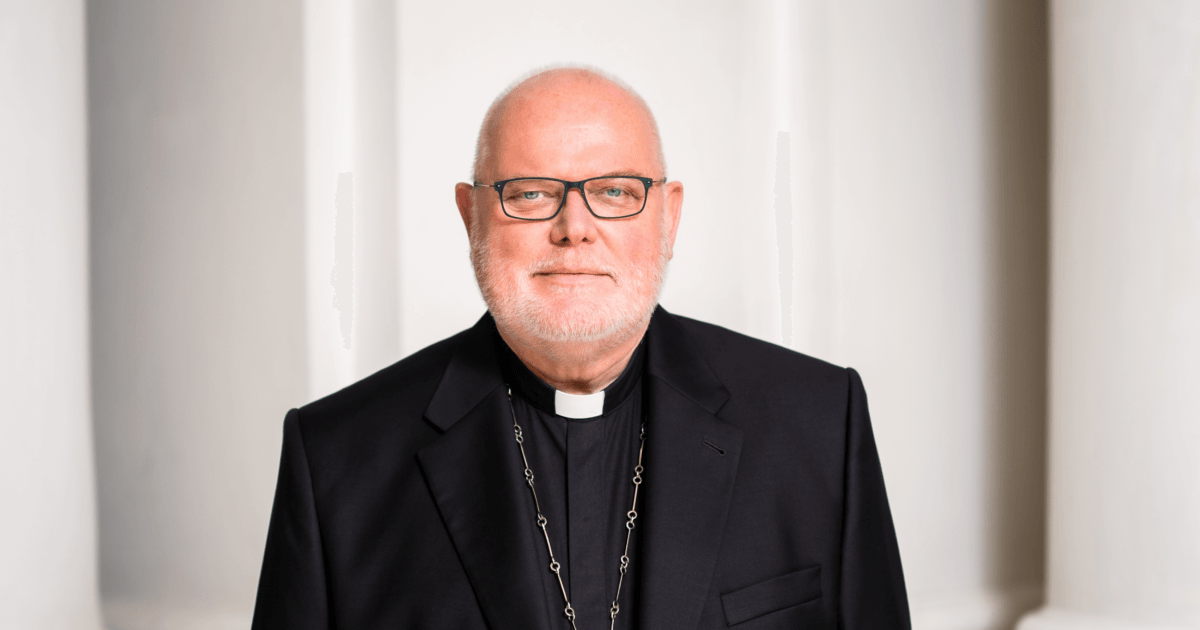
Priests in the Archdiocese of Munich and Freising have pushed back against Cardinal Reinhard Marx’s proposal for same-sex blessings, asking the cardinal if they are to obey him or the Vatican.

On Thursday, German outlet Die Tagespost published details of an initiative from concerned priests in one of the nation’s largest ecclesiastical provinces. Some 26 priests, reportedly nearly all young ordinands, have pushed back against the Cardinal-Archbishop on the matter of blessings for same-sex and other irregular couples.  
The letter – sent in May but only revealed publicly this week – concerns the document “Blessings for couples who love one another”, published by the German Bishops’ Conference (DBK) in April 2025.  

“Why do you ask us to act against the repeatedly stated will of the Holy Father?”, the priests asked Cdl. Marx. They argued that the DBK’s text on blessings presents an “obvious contradiction” to Fiducia Supplicans, and asked “is Fiducia Supplicans no longer valid in our archdiocese?”

The DBK’s 2025 text was a product not just of the DBK but also of the Synodal Assembly of the Synodal Path of the German Bishops’ Conference and the Central Committee of German Catholics (ZdK), both of whom “recommended that blessing ceremonies be made available to couples who do not wish to enter into a sacramental church marriage or for whom such a marriage is not an option.”

Those eligible for the blessings, as outlined in the DBK’s text, included “couples not married in the Church, divorced and remarried couples, as well as couples representing the full diversity of sexual orientations and gender identities, are naturally part of our society.”

Marx wrote to his Archdiocese in April, calling on clergy and pastoral workers to implement the blessings document, urging that no couple be denied a blessing.  

According to the Archdiocesan group of priests – just 26 out of around 900 clergy – Cdl. Marx’s request for them to implement the DBK’s text is “without any legal binding force”. True, the German Bishops’ text does not mandate the blessings on priests, explicitly allowing them to refuse if they “cannot reconcile a blessing with their conscience”. However the 26 priests warned that this also turned the Church’s practice and doctrine into “into a matter of individual conscience.”  

“What”, they added, “are we to rely on when we must weigh whether your recommendation or our own understanding of Church doctrine should take precedence?”

According to the group of priests, the DBK’s text which Marx is outlining for the archdiocese to follow, risks dividing the clergy and faithful against each other, especially as they protest over why priests “who uphold valid doctrine have to justify themselves”.  

The main issue, the group warned, is that “that significant misunderstandings will arise among us priests—and consequently, inevitably, among the faithful—which will lead to division. Out of love for the Church, we cannot reconcile this with our conscience.”

Controversy has plagued the DBK’s text ever since it was published just days after the death of Pope Francis last spring. It has even divided the Church in Germany, as the various dioceses have taken differing positions on whether they will adopt it, due to the fact it goes beyond even the already controversial provisions of Fiducia Supplicans in creating formalised or ritualised blessing of same-sex couples.

The DBK claimed that the Holy See had approved their text and even that it had been produced in conjunction with the Vatican, but Cardinal Victor Manuel Fernández rejected this. Questioned about it in October, the prefect of the Dicastery for the Doctrine of the Faith said that his office “didn’t approve anything, and wrote a letter some time ago reminding [the DBK] that [Fiducia supplicans] excluded any form of ritualisation, just as the pope has said.”

Notwithstanding this, those in favour of the text in Germany have pushed ahead with implementing it and urging their clergy to do so, while officially holding back from ordering compliance with the text.  

Since sending their letter to Cdl. Marx in May, the priests had reportedly been met with silence and even slight ridicule, with Marx rumoured to have labelled them as “youthful troublemakers”, although the Archdiocese has denied that.  

Marx eventually responded to Die Tagespost’s questions, stating that he has suggested a year-long trail of the document on blessings, and then to engage in a conversation. The Catholic Herald has contacted the Archdiocese for comment and further information but as yet has not received any response.

The Holy See has been publicly restrained on the matter in general, but Pope Leo XIV did make direct reference to the issue during a papal press conference in April. He revealed that the Vatican had already spoken with the DBK, adding that “the Holy See has made it clear that we do not agree with the formal blessing of couples—in this case, same-sex couples, as you requested—or of couples in irregular situations, beyond what Pope Francis has specifically permitted by saying that all people should receive the blessing.”

Leo’s comments on the plane were themselves somewhat contradictory in that he appeared to carefully chose just some of Pope Francis’ comments on the issue of same-sex blessings, while whitewashing others from the record. In light of this continued mixed messaging, calls for Leo to formally abrogate or correct Fiducia Supplicans have increased, although the chance of him doing so appears slim.

Michael Haynes is an English journalist in the Holy See Press Corps. He serves as Vatican Correspondent for the Catholic Herald, while readers can follow him at Per Mariam and on X @MLJHaynes.

Continue reading with a free account

Create a free account to read up to five articles each month
Create free account

You have # free articles remaining this month.

Subscribe to get unlimited access.
Sign up

subscribe to the catholic herald today

Our best content is exclusively available to our subscribers. Subscribe today and gain instant access to expert analysis, in-depth articles, and thought-provoking insights—anytime, anywhere. Don’t miss out on the conversations that matter most.
Subscribe