President Donald Trump has launched a direct public attack on Pope Leo XIV, accusing him of weakness on crime and foreign policy before escalating his criticism in remarks to journalists and with an image portraying himself as Jesus Christ.
In a post on his Truth Social platform, published late on April 12, the US president claimed that the Pope was “WEAK on Crime, and terrible for Foreign Policy,” and criticised what he described as the pontiff’s failure to acknowledge restrictions placed on Christian worship during the Covid 19 pandemic.
He wrote that Leo “talks about ‘fear’ of the Trump Administration, but doesn’t mention the FEAR that the Catholic Church, and all other Christian Organizations, had during COVID when they were arresting priests, ministers, and everybody else, for holding Church Services”.
Trump also drew a personal contrast with the Pope’s family, adding: “I like his brother Louis much better than I like him, because Louis is all MAGA. He gets it, and Leo doesn’t!”
He went on to attack the Pope’s stance on international affairs, writing: “I don’t want a Pope who thinks it’s OK for Iran to have a Nuclear Weapon. I don’t want a Pope who thinks it’s terrible that America attacked Venezuela … And I don’t want a Pope who criticizes the President of the United States because I’m doing exactly what I was elected … to do.”
The post further suggested that Leo’s election had been politically motivated, claiming: “He wasn’t on any list to be Pope, and was only put there by the Church because he was an American, and they thought that would be the best way to deal with President Donald J. Trump.” Trump added: “If I wasn’t in the White House, Leo wouldn’t be in the Vatican.”
He concluded with a direct admonition: “Leo should get his act together as Pope, use Common Sense, stop catering to the Radical Left, and focus on being a Great Pope, not a Politician. It’s hurting him very badly and, more importantly, it’s hurting the Catholic Church!”
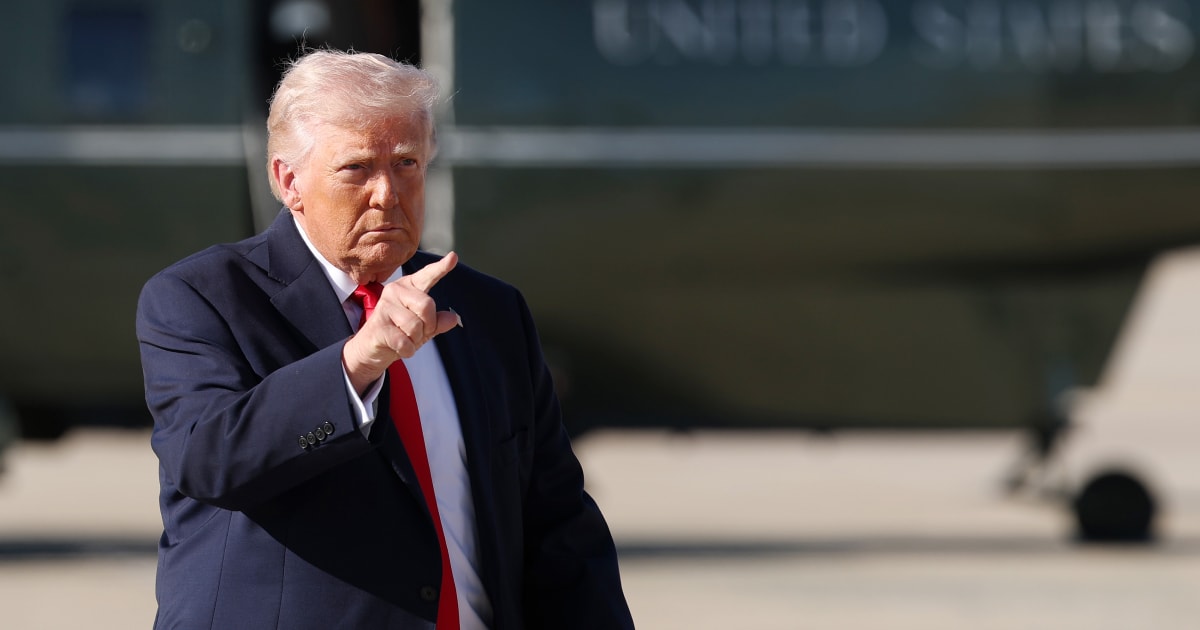
The intervention did not end there. Speaking to journalists outside Joint Base Andrews, Trump said: “I don’t think he’s doing a very good job. He likes crime, I guess … I’m not a big fan of Pope Leo. He’s a very liberal person, and he’s a man that doesn’t believe in stopping crime.”
Shortly afterwards, Trump posted an image depicting himself as Jesus Christ healing the sick, surrounded by eagles, fighter jets and the Statue of Liberty.
Archbishop Paul S. Coakley, president of the US Conference of Catholic Bishops, issued a brief response to a social media post by President Trump on Sunday evening.
“I am disheartened that the President chose to write such disparaging words about the Holy Father. Pope Leo is not his rival, nor is the Pope a politician. He is the Vicar of Christ who speaks from the truth of the Gospel and for the care of souls,” the archbishop said.
The remarks come at a moment of heightened international tension and diplomatic sensitivity. On the same day as Trump’s post, Pope Leo presided over an evening prayer service in St Peter’s Basilica, coinciding with the beginning of face to face negotiations between the United States and Iran in Pakistan during a fragile ceasefire.
Although the Pope did not mention the United States or Trump directly, his language was widely interpreted as a response to the tone of recent American statements. On Palm Sunday he said that God “does not listen to the prayers of those who wage war, but rejects them,” and cited the Book of Isaiah: “even though you make many prayers, I will not listen, your hands are full of blood.”
Before the ceasefire, when Trump warned of potential large scale strikes against Iranian infrastructure and declared that “an entire civilization will die tonight”, the Pope described such rhetoric as “truly unacceptable”.
Pope Leo is due to depart today for an 11 day visit to Africa. The comments in Rome and in Washington, however, have already ensured that the question of the Vatican’s relationship with Washington will dominate papal news over the coming days.
Despite attempts in some quarters to cast Leo as a figure amenable to progressive politics, the record of Pope Leo XIV over the past year has been consistently in line with normative Church teaching. He has reaffirmed that marriage is exclusively between a man and a woman, upheld the Church’s definitive teaching against the ordination of women, defended the rights of nations to regulate migration, and described abortion as a “deplorable” suppression of human life. These are not positions that sit comfortably within modern liberal frameworks, nor, however, do they align neatly with the populist Right, which increasingly measures moral authority by political utility.
The Chair of Peter and the Church is not a cabinet office, and the Pope is not a political surrogate. The Roman Pontiff answers to God, not to any administration, party or movement.
The timing is also significant. The remarks come during what has become known as “America Week” in Rome, a period marked by gatherings of wealthy Catholic donors, intellectuals and activists, such as the Napa Institute. These events are intended to strengthen spiritual and financial ties between American Catholicism and the Holy See and to support Vatican initiatives, yet the present controversy threatens to expose a fault line within the modern American conservative movement.
There are, moreover, implications for American politics itself. The emergence of a distinct Catholic political class, intellectually serious, socially conservative and beyond the usual political categories, has begun to alter the landscape. This group does not fit easily within the modern alignments of either major party.
For decades, a coalition of evangelical Protestants has exercised a decisive influence over the direction of conservative politics, often acting as a bottleneck through which policy and messaging have been shaped. What is now becoming clearer is the rise of a distinct Catholic political class that does not fully identify with that tradition.
This group is increasingly prepared to challenge elements of the GOP platform where it conflicts with Catholic moral and social teaching. However, it is also unlikely to return to the Democratic fold of the days of Al Smith or Kennedy, which has now embraced positions fundamentally at odds with Catholic teaching. The resulting tension may prove decisive in the future contest over JD Vance’s nomination as the Republican presidential candidate in 2028.
At the same time, such political rhetoric from Trump does not touch the essence of the papal office. The Roman Pontiff does not derive his authority from electoral majorities or public approval, but, as Vicar of Christ, his authority extends beyond the shifting fortunes of temporal power. The gladius spiritualis and the gladius materialis remain instructive in this context. The spiritual sword belongs to the Church and is exercised directly by her for the salvation of souls; the temporal sword belongs to rulers and states, ordered to the governance of earthly society. Yet the tradition of the Church has always maintained that the spiritual power is higher in dignity, because it concerns man’s final end. Temporal authority, however necessary, is subordinate in principle to that higher law.
Thus, the office the Pope holds is not contingent upon favour in Washington or any other government, as the Church and the Faith have outlasted emperors, kings and republics alike, and its authority is not diminished by the words of men. Trump’s attempt to politicise the papacy will fail, even if he continues with this contentious rhetoric.
Ultimately, attention will instead turn to the arrival of Archbishop Caccia, the new Apostolic Nuncio in Washington, placing fresh responsibility upon Cardinal Christophe Pierre’s successor, who inherits a relationship now strained by public controversy.


.jpg)