



April 3, 2026

Veronica against the crowd

Brother René Stockman
More
Related
Min read
share

During the Triduum, we might pause for a moment to consider a figure we know only from the Stations of the Cross, who may well be no more than a legend, but who nevertheless has a special message to convey to us, yes, a message for today as well.

While Simon of Cyrene had to be compelled to help Jesus carry His cross, Veronica leaves the crowd spontaneously and of her own free will to offer Him some comfort. In doing so, she has become an icon of pure love, marked precisely by what is gratuitous, unconditional and spontaneous, and by a total lack of desire for reciprocity. Such love becomes a rare and precious pearl in a time when everything we do is expected to be compensated. We have even reached a point where extras are expected and demanded for tasks that have not been performed. Today, people speak of holiday pay, a thirteenth month’s salary and an extra tip at Christmas. Recently, there was discussion in the media about whether one should give cleaning help an extra tip at the end of the year. I do not presume to question these legal entitlements, but there is a certain lack of logic here. It makes sense that people should be properly compensated for the work they do. But when the “extra” reward they receive becomes a demand, it casts a shadow over the gratuitous and spontaneous character that such an “extra” reward is supposed to embody. When everything must be laid down in laws and follow strict procedures, we are increasingly deprived of the space to do anything spontaneously and on a voluntary basis. In many places, even voluntary work becomes subject to all sorts of conditions. Sometimes it can be difficult to do anything on a purely voluntary basis. It would be difficult for a Veronica today to reach Jesus without first meeting a series of legal requirements.
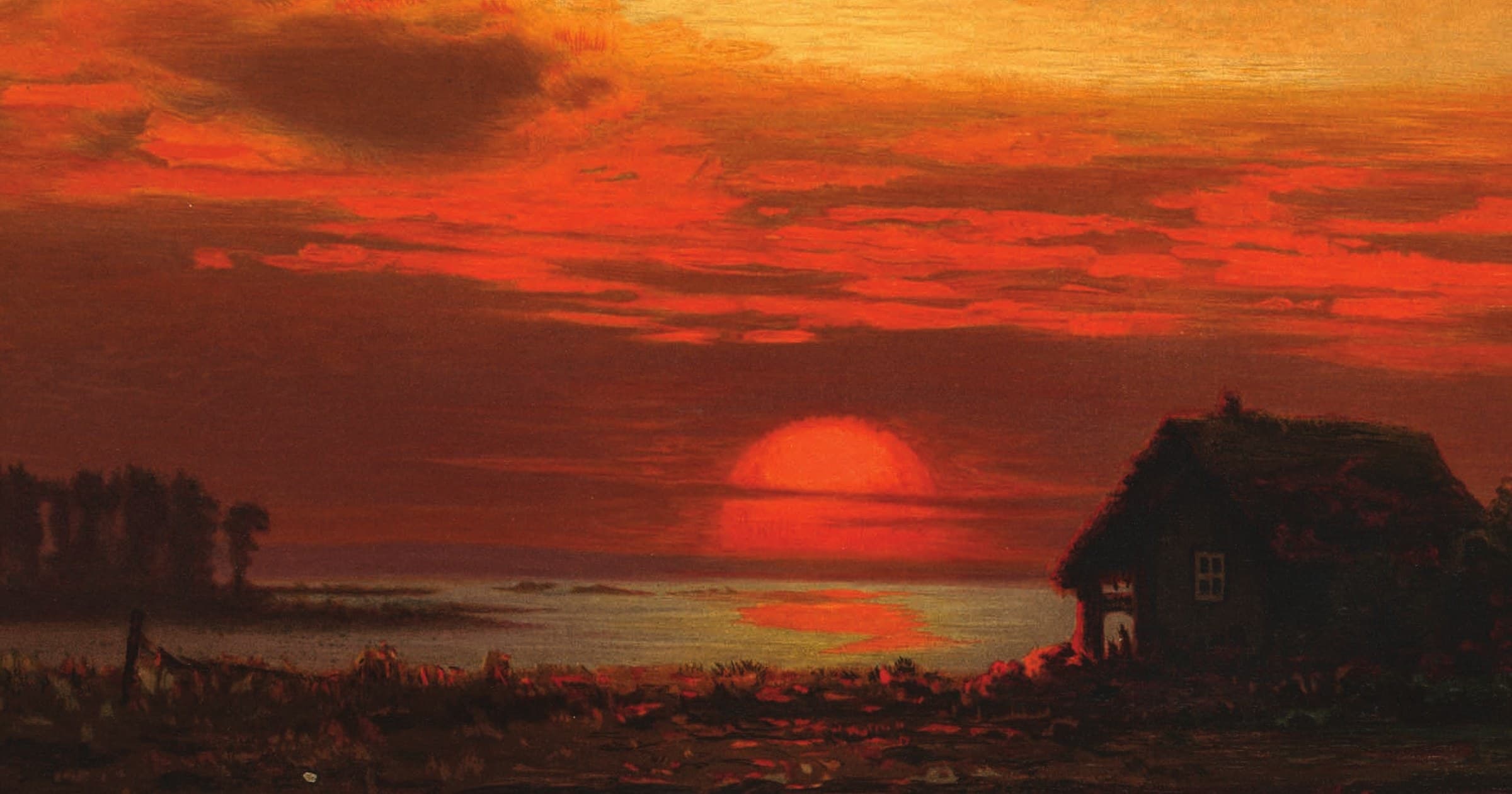
But the greatest difficulty Veronica had to overcome was her human perspective, and that is a difficulty we continue to face today. It is easier to go along with the crowd and shout, “Crucify Him,” than to leave that incited mob and swim against the tide. There are many situations in which it can be truly difficult and delicate to voice an opinion that runs against trends supposedly supported by society at large. An objective judgement about what is right and wrong becomes extremely difficult when that judgement depends on what the sociological majority thinks. 

People often do not hesitate to manipulate numbers to support their case. It is an open secret that surveys on ethical issues are frequently shaped to present what is claimed to be the majority view, namely the view that a certain group, driven by ideological conviction, is determined to push through. Furthermore, deep down, people may hold a different view from the one they express when asked about it in public. On the altar of human decency, deeply personal convictions are sometimes concealed and silenced in order to conform to what public opinion imposes in an almost compulsive way. Often, personal conscience is silenced in the process. Swimming against the tide therefore requires courage, and the isolation in which one may find oneself as a result can be severe. One risks being marginalised, cast out of one’s circle of friends, pointed at and even sanctioned. Holding a different opinion today, within the so-called “woke” mindset, carries the risk of being quickly accused of discrimination and even legally prosecuted.

During the French Revolution, there is the well known story of the Carmelite nuns of Compiègne being led to the scaffold. One by one, these sisters ascend the steps of the platform to be beheaded. One sister managed to escape in time and stood among the crowd, watching as her fellow sisters died a martyr’s death one by one. As they climbed the steps leading to the guillotine, they sang the successive verses of the “Veni Creator”, and when it seemed that no one was left to sing the final verse, this sister broke away from the crowd to share the fate of her sisters. It is a moving story of how love can lead to great solidarity. The only motive that prompted this sister to ascend the scaffold as well was love. “Love gives strength that nature cannot give,” said my community’s founder, the Venerable Peter Joseph Triest. He could say this after having spent five years in hiding in the aftermath of that same French Revolution. He, too, could have chosen the easy path and taken the oath of allegiance demanded of priests by the new regime. But he chose to remain faithful to the Church and to stay close to the faithful in secret.

Today, there are many occasions when we may be called to be like Veronica in this world, and even within the Church. Amid the confusion that exists within the Church, it takes courage not simply to go along with those who shout the loudest and advance ideas that sound appealing but in fact undermine the true evangelical foundation of the faith and are driven more by sociological considerations. People want to keep up with the world and thereby secularise the faith. A false pastoral concern develops, in which the distinction between good and evil increasingly blurs and, in the end, everything is tolerated under the so-called cloak of love. But this does humanity no good, and it strips the Gospel message of its purpose: to be that salt and that light that the present world, sinking ever deeper into darkness and relativism, needs.

For this, we need Veronicas today more than ever, those who carry the light in one hand and the salt in the other into the world, and who, out of love for Christ, are prepared to be jeered at and reviled. The true message and mission of the Council was not to adapt the faith to the world, as some claim today and try to implement, but, as is so clearly stated in the apostolic constitution Gaudium et Spes: “It is the Church’s mission to discern the signs of the times at every moment and to interpret them in the light of the Gospel, so that, adapted to each generation, she may offer clear answers to the eternal questions of people regarding the meaning of their lives, now and in the future, and regarding the way in which they should live together” (no. 4). Our reference point is and remains the person of Jesus Christ and the message He brought us, as handed down to us in the Gospel.

The question always remains: how would Jesus have reacted in this situation? It seems as though we have ended up in a completely polarised situation today. On the one hand, there are those who shut themselves off from reality and view every sign of the times as a threat, having reduced and stifled the word of Jesus to an ideology. On the other hand, there are those who no longer take the Gospel as their reference point, but instead begin to venerate the signs of the times as an ideology. In both cases, the true and living message of Jesus is absent and replaced by a sterile ideology.

That is why, like Veronica, we must continue to seek the true face of Christ, and this can be received and known only if we allow ourselves to be met by Christ, if we seek Him in prayer and let ourselves be illuminated by His face. Pope Benedict said that we must practise theology on our knees, in prayer. When theology is not the fruit of prayer, it becomes mere religious scholarship and is reduced to mere knowledge. But it is then a form of knowledge in which the heart is missing, and it is through and with the heart that we must go to people in order to help them come to know and love the true face of Jesus. And it is from this knowledge and this love for the face of Christ that we look at the world and come to know, analyse and interpret the signs of the times.

In a quasi miraculous manner, the sweat cloth that was placed on the face of the dead Jesus and on which His face is imprinted has been preserved in the church of the Volto Santo in Manoppello, Abruzzo, Italy. Scientific research has shown that this cannot be a forgery, nor is it the work of human hands. Through contact with the dead body, the features of the face were imprinted on the cloth, but with the eyes open. Here we have the image of the living Christ, whereas in the Shroud of Turin we see the image of the dead Jesus. It is perhaps this sweat cloth, the sudarium, that lies at the root of the devotion and the story of Veronica. The story of her generosity and the existence of the sudarium set us on the path to knowing the true face of Jesus, the “Vero Icon” of Jesus, to taking His face into ourselves, to letting His face shine forth and carrying it into the world, and to discovering His face in the face of our fellow human beings.

It also helps us to understand better our true origin: that we are created in the image and likeness of God. That image is what has been given to us as the deepest reality within our lives and of our lives. The image of God is present in each of us. It is this thought that I cherish every time I look at il Volto Santo of Manoppello, meditate upon it and, above all, allow myself to be struck by that open gaze of Jesus. I then hear Jesus asking me: “Are you truly like Me? Is your face an image of My face? Do people see Me when they meet you?” These are piercing questions that I must answer, for the story of Creation echoes the call to grow in this likeness to God, becoming ever more conformed to the image that God has planted of Himself within me.

Veronica invites us to go out into the world with this image of God, to bring God’s presence into the world and to share the true face that I have received from Jesus out of love.

At the Last Supper, Jesus gave us His Body and Blood as a foreshadowing of His bloody Passion, but also as a lasting presence among us. With what gratitude, then, may we receive Jesus Himself within us, with His Body and His Blood, every time we celebrate the Eucharist.

He has also called us to recognise His own face in the face of every person we meet. In a wondrous way, to help us visually, He has left us the image of His face at the church of the Volto Santo in Manoppello. May it also become part of our meditation during the Triduum. For it is pre-eminently through the face that we come to know and recognise others.

Brother René Stockman is the former Superior General of the Congregation of the Brothers of Charity and a specialist in psychiatric caregiving.

During the Triduum, we might pause for a moment to consider a figure we know only from the Stations of the Cross, who may well be no more than a legend, but who nevertheless has a special message to convey to us, yes, a message for today as well.

While Simon of Cyrene had to be compelled to help Jesus carry His cross, Veronica leaves the crowd spontaneously and of her own free will to offer Him some comfort. In doing so, she has become an icon of pure love, marked precisely by what is gratuitous, unconditional and spontaneous, and by a total lack of desire for reciprocity. Such love becomes a rare and precious pearl in a time when everything we do is expected to be compensated. We have even reached a point where extras are expected and demanded for tasks that have not been performed. Today, people speak of holiday pay, a thirteenth month’s salary and an extra tip at Christmas. Recently, there was discussion in the media about whether one should give cleaning help an extra tip at the end of the year. I do not presume to question these legal entitlements, but there is a certain lack of logic here. It makes sense that people should be properly compensated for the work they do. But when the “extra” reward they receive becomes a demand, it casts a shadow over the gratuitous and spontaneous character that such an “extra” reward is supposed to embody. When everything must be laid down in laws and follow strict procedures, we are increasingly deprived of the space to do anything spontaneously and on a voluntary basis. In many places, even voluntary work becomes subject to all sorts of conditions. Sometimes it can be difficult to do anything on a purely voluntary basis. It would be difficult for a Veronica today to reach Jesus without first meeting a series of legal requirements.
But the greatest difficulty Veronica had to overcome was her human perspective, and that is a difficulty we continue to face today. It is easier to go along with the crowd and shout, “Crucify Him,” than to leave that incited mob and swim against the tide. There are many situations in which it can be truly difficult and delicate to voice an opinion that runs against trends supposedly supported by society at large. An objective judgement about what is right and wrong becomes extremely difficult when that judgement depends on what the sociological majority thinks. 

People often do not hesitate to manipulate numbers to support their case. It is an open secret that surveys on ethical issues are frequently shaped to present what is claimed to be the majority view, namely the view that a certain group, driven by ideological conviction, is determined to push through. Furthermore, deep down, people may hold a different view from the one they express when asked about it in public. On the altar of human decency, deeply personal convictions are sometimes concealed and silenced in order to conform to what public opinion imposes in an almost compulsive way. Often, personal conscience is silenced in the process. Swimming against the tide therefore requires courage, and the isolation in which one may find oneself as a result can be severe. One risks being marginalised, cast out of one’s circle of friends, pointed at and even sanctioned. Holding a different opinion today, within the so-called “woke” mindset, carries the risk of being quickly accused of discrimination and even legally prosecuted.

During the French Revolution, there is the well known story of the Carmelite nuns of Compiègne being led to the scaffold. One by one, these sisters ascend the steps of the platform to be beheaded. One sister managed to escape in time and stood among the crowd, watching as her fellow sisters died a martyr’s death one by one. As they climbed the steps leading to the guillotine, they sang the successive verses of the “Veni Creator”, and when it seemed that no one was left to sing the final verse, this sister broke away from the crowd to share the fate of her sisters. It is a moving story of how love can lead to great solidarity. The only motive that prompted this sister to ascend the scaffold as well was love. “Love gives strength that nature cannot give,” said my community’s founder, the Venerable Peter Joseph Triest. He could say this after having spent five years in hiding in the aftermath of that same French Revolution. He, too, could have chosen the easy path and taken the oath of allegiance demanded of priests by the new regime. But he chose to remain faithful to the Church and to stay close to the faithful in secret.

Today, there are many occasions when we may be called to be like Veronica in this world, and even within the Church. Amid the confusion that exists within the Church, it takes courage not simply to go along with those who shout the loudest and advance ideas that sound appealing but in fact undermine the true evangelical foundation of the faith and are driven more by sociological considerations. People want to keep up with the world and thereby secularise the faith. A false pastoral concern develops, in which the distinction between good and evil increasingly blurs and, in the end, everything is tolerated under the so-called cloak of love. But this does humanity no good, and it strips the Gospel message of its purpose: to be that salt and that light that the present world, sinking ever deeper into darkness and relativism, needs.

For this, we need Veronicas today more than ever, those who carry the light in one hand and the salt in the other into the world, and who, out of love for Christ, are prepared to be jeered at and reviled. The true message and mission of the Council was not to adapt the faith to the world, as some claim today and try to implement, but, as is so clearly stated in the apostolic constitution Gaudium et Spes: “It is the Church’s mission to discern the signs of the times at every moment and to interpret them in the light of the Gospel, so that, adapted to each generation, she may offer clear answers to the eternal questions of people regarding the meaning of their lives, now and in the future, and regarding the way in which they should live together” (no. 4). Our reference point is and remains the person of Jesus Christ and the message He brought us, as handed down to us in the Gospel.

The question always remains: how would Jesus have reacted in this situation? It seems as though we have ended up in a completely polarised situation today. On the one hand, there are those who shut themselves off from reality and view every sign of the times as a threat, having reduced and stifled the word of Jesus to an ideology. On the other hand, there are those who no longer take the Gospel as their reference point, but instead begin to venerate the signs of the times as an ideology. In both cases, the true and living message of Jesus is absent and replaced by a sterile ideology.

That is why, like Veronica, we must continue to seek the true face of Christ, and this can be received and known only if we allow ourselves to be met by Christ, if we seek Him in prayer and let ourselves be illuminated by His face. Pope Benedict said that we must practise theology on our knees, in prayer. When theology is not the fruit of prayer, it becomes mere religious scholarship and is reduced to mere knowledge. But it is then a form of knowledge in which the heart is missing, and it is through and with the heart that we must go to people in order to help them come to know and love the true face of Jesus. And it is from this knowledge and this love for the face of Christ that we look at the world and come to know, analyse and interpret the signs of the times.

In a quasi miraculous manner, the sweat cloth that was placed on the face of the dead Jesus and on which His face is imprinted has been preserved in the church of the Volto Santo in Manoppello, Abruzzo, Italy. Scientific research has shown that this cannot be a forgery, nor is it the work of human hands. Through contact with the dead body, the features of the face were imprinted on the cloth, but with the eyes open. Here we have the image of the living Christ, whereas in the Shroud of Turin we see the image of the dead Jesus. It is perhaps this sweat cloth, the sudarium, that lies at the root of the devotion and the story of Veronica. The story of her generosity and the existence of the sudarium set us on the path to knowing the true face of Jesus, the “Vero Icon” of Jesus, to taking His face into ourselves, to letting His face shine forth and carrying it into the world, and to discovering His face in the face of our fellow human beings.

It also helps us to understand better our true origin: that we are created in the image and likeness of God. That image is what has been given to us as the deepest reality within our lives and of our lives. The image of God is present in each of us. It is this thought that I cherish every time I look at il Volto Santo of Manoppello, meditate upon it and, above all, allow myself to be struck by that open gaze of Jesus. I then hear Jesus asking me: “Are you truly like Me? Is your face an image of My face? Do people see Me when they meet you?” These are piercing questions that I must answer, for the story of Creation echoes the call to grow in this likeness to God, becoming ever more conformed to the image that God has planted of Himself within me.

Veronica invites us to go out into the world with this image of God, to bring God’s presence into the world and to share the true face that I have received from Jesus out of love.

At the Last Supper, Jesus gave us His Body and Blood as a foreshadowing of His bloody Passion, but also as a lasting presence among us. With what gratitude, then, may we receive Jesus Himself within us, with His Body and His Blood, every time we celebrate the Eucharist.

He has also called us to recognise His own face in the face of every person we meet. In a wondrous way, to help us visually, He has left us the image of His face at the church of the Volto Santo in Manoppello. May it also become part of our meditation during the Triduum. For it is pre-eminently through the face that we come to know and recognise others.

Brother René Stockman is the former Superior General of the Congregation of the Brothers of Charity and a specialist in psychiatric caregiving.

subscribe to
the catholic herald

Continue reading your article with a subscription.
Read 5 articles with our free plan.
Subscribe

subscribe to the catholic herald today

Our best content is exclusively available to our subscribers. Subscribe today and gain instant access to expert analysis, in-depth articles, and thought-provoking insights—anytime, anywhere. Don’t miss out on the conversations that matter most.
Subscribe