

October 23, 2025
October 23, 2025

Vatican to return Indigenous artefacts to Canada ahead of Jubilee year

Min read
share

The Vatican is preparing to repatriate a collection of Indigenous artefacts, including an Inuit kayak, from its Anima Mundi museum to communities in Canada.

The Vatican is set to announce the repatriation of a “few dozen” Indigenous artefacts from its ethnographic collection to Indigenous communities in Canada, according to officials.

The items, which include a kayak used by Inuit communities, form part of the holdings of the Vatican Museums’ Anima Mundi collection and have become emblematic of the Church’s broader reckoning with its historical role in the suppression of Indigenous culture in the Americas.
Negotiations began to gain momentum after Pope Francis met with Canadian Indigenous leaders in 2022, when they travelled to Rome to receive his apology for the Church’s part in operating residential schools.

During that visit, the leaders were shown items such as wampum belts, war clubs, and masks, and asked for their return. The Pope subsequently affirmed his willingness to return items “where it’s necessary to make a gesture”, saying, “In the case where you can return things, where it’s necessary to make a gesture, better to do it.”

The Canadian Conference of Catholic Bishops (CCCB) has confirmed it is working with Indigenous groups to arrange for the return of the items to their “originating communities”. Both Vatican and Canadian officials expect a formal announcement in the coming weeks and hope the artefacts could be back on Canadian soil before the end of the year.

Observers note that this would follow the “church-to-church” model previously used by the Holy See when it handed over fragments of the Parthenon Marbles to the Orthodox Church of Greece in 2023.

Historians highlight that most of the items were originally sent to Rome for a 1925 exhibition in the Vatican Gardens during that year’s Holy Year. The Vatican maintains the items were received as “gifts” to Pope Pius XI, who sought to highlight the global reach of Catholic missions.

However, secular critics point to the substantial power imbalance at the time and argue that the concept of freely given gifts must be “cast in doubt” when Catholic religious orders were actively enforcing the Canadian government’s assimilation policy, which the Truth and Reconciliation Commission of Canada described as “cultural genocide”.

Once returned, the items will be taken to the Canadian Museum of History in Gatineau, Quebec, where experts and Indigenous partners will work to identify the specific communities of origin and determine appropriate custodianship.

A senior Canadian official insisted that the ultimate keepers of the objects will be the Indigenous communities themselves. The decision to act now coincides with the 2025 Jubilee, marking the centenary of the 1925 exhibition and inviting reflection, repentance, and hope.

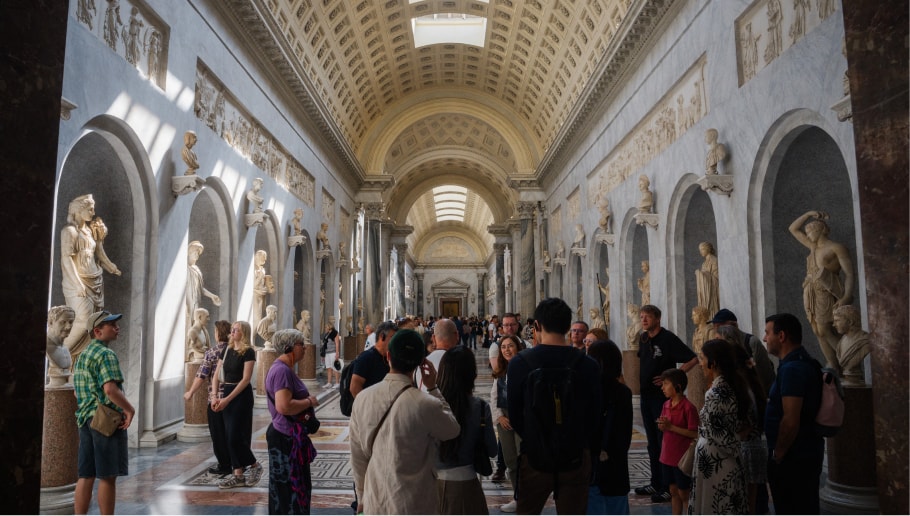
(Photo by Dimitar DILKOFF / AFP) (Photo by DIMITAR DILKOFF/AFP via Getty Images)

The Vatican is preparing to repatriate a collection of Indigenous artefacts, including an Inuit kayak, from its Anima Mundi museum to communities in Canada.

The Vatican is set to announce the repatriation of a “few dozen” Indigenous artefacts from its ethnographic collection to Indigenous communities in Canada, according to officials.

The items, which include a kayak used by Inuit communities, form part of the holdings of the Vatican Museums’ Anima Mundi collection and have become emblematic of the Church’s broader reckoning with its historical role in the suppression of Indigenous culture in the Americas.
Negotiations began to gain momentum after Pope Francis met with Canadian Indigenous leaders in 2022, when they travelled to Rome to receive his apology for the Church’s part in operating residential schools.

During that visit, the leaders were shown items such as wampum belts, war clubs, and masks, and asked for their return. The Pope subsequently affirmed his willingness to return items “where it’s necessary to make a gesture”, saying, “In the case where you can return things, where it’s necessary to make a gesture, better to do it.”

The Canadian Conference of Catholic Bishops (CCCB) has confirmed it is working with Indigenous groups to arrange for the return of the items to their “originating communities”. Both Vatican and Canadian officials expect a formal announcement in the coming weeks and hope the artefacts could be back on Canadian soil before the end of the year.

Observers note that this would follow the “church-to-church” model previously used by the Holy See when it handed over fragments of the Parthenon Marbles to the Orthodox Church of Greece in 2023.

Historians highlight that most of the items were originally sent to Rome for a 1925 exhibition in the Vatican Gardens during that year’s Holy Year. The Vatican maintains the items were received as “gifts” to Pope Pius XI, who sought to highlight the global reach of Catholic missions.

However, secular critics point to the substantial power imbalance at the time and argue that the concept of freely given gifts must be “cast in doubt” when Catholic religious orders were actively enforcing the Canadian government’s assimilation policy, which the Truth and Reconciliation Commission of Canada described as “cultural genocide”.

Once returned, the items will be taken to the Canadian Museum of History in Gatineau, Quebec, where experts and Indigenous partners will work to identify the specific communities of origin and determine appropriate custodianship.

A senior Canadian official insisted that the ultimate keepers of the objects will be the Indigenous communities themselves. The decision to act now coincides with the 2025 Jubilee, marking the centenary of the 1925 exhibition and inviting reflection, repentance, and hope.

(Photo by Dimitar DILKOFF / AFP) (Photo by DIMITAR DILKOFF/AFP via Getty Images)

share

subscribe to the catholic herald today

Our best content is exclusively available to our subscribers. Subscribe today and gain instant access to expert analysis, in-depth articles, and thought-provoking insights—anytime, anywhere. Don’t miss out on the conversations that matter most.
Subscribe